
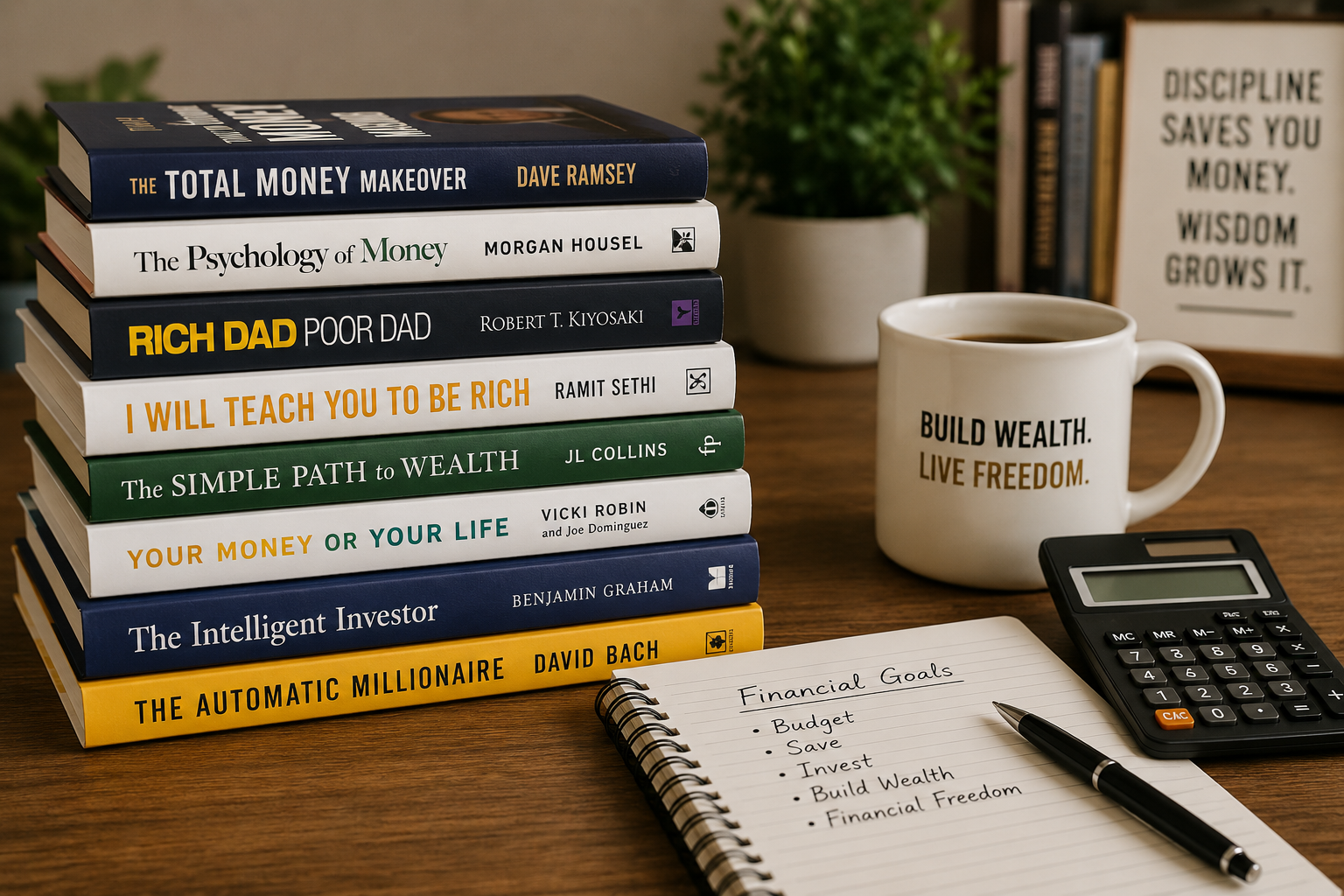
Imagine giving two people ₦10 million each to do business today.
One of them spend almost everything within two years. He buys a newer car, upgrade his apartment, travel more often, change his phone twice, and suddenly discover that maintaining a wealthy lifestyle is surprisingly expensive. Before long, the money disappears, and life quietly returns to where it started with him.
The second person lives in the same country, faces the same inflation, pays the same electricity bills, and shops in the same market. Yet five years later, that ₦10 million has grown into something much bigger. He now own investments, earn passive income, and no longer panic whenever an unexpected expense comes up.
What separated them? Do you think it was intelligence?
It was never intelligence.
It was not luck.
Neither was it because one person earned more money.
The real difference was knowledge.
Money has a funny way of exposing what we already know. If you do not understand how it works, more income only gives you bigger mistakes to make. On the other hand, when you understand how money behaves, even a modest income can gradually become a source of lasting wealth.
That is one lesson I have seen repeatedly while building MoneyClarity. When studying the habits of financially disciplined families, or reading interviews with self-made millionaires, one pattern keeps showing up. Almost every one of them became a student of money long before they became wealthy.
And the easiest classroom they entered was not a university.
It was a bookshelf.
Books have quietly created more financially successful people than most people realize. They teach you how to think before they teach you what to do. That matters because financial success rarely begins in your bank account. It begins in your mind.
For you to be here simply means you want to know the best books to learn money management. you are already taking a step that many people never take. Instead of looking for another “get rich quick” secret, you are choosing to understand the principles that have helped millions of ordinary people escape debt, build wealth, invest wisely, and enjoy financial peace.
This guide is worth reading. I spent time comparing recommendations from respected investors, financial educators, economists, business leaders, and readers whose lives genuinely changed after reading these books. More importantly, I will explain why each book deserves your time, who should read it, what lessons you can expect to learn, and how those lessons apply to everyday life in Nigeria.
Whether you are a university student managing your allowance, a young graduate earning your first salary, a business owner trying to separate personal and business finances, or someone who simply wants to stop wondering where their money disappears every month, this guide will point you towards books that can genuinely change your financial future.
Why You Should Read Books About Money Management
One question comes up surprisingly often:
“Why should I read a 300-page book when I can watch a five-minute YouTube video?”
It sounds reasonable until you realise that social media usually teaches tactics, while books teach thinking.
A short video may tell you to save 20% of your income. Another tells you to invest in stocks. Someone else insists real estate is the fastest way to become rich.
But very few explain why people fail to save in the first place, why emotions destroy investment decisions, why lifestyle inflation gradually keeps people broke despite salary increases, or why patience often beats intelligence in wealth building.
That is where books shine.
The best personal finance authors spend years researching human behaviour, interviewing successful investors, analysing financial crises, and testing ideas before publishing them. Reading one excellent finance book is like sitting across the table from someone who has spent decades making expensive mistakes so you do not have to.
Think about someone who starts earning ₦250,000 every month.
Without financial education, they may immediately finance a new car, buy expensive gadgets, eat out more often, subscribe to services they barely use, and gradually increase their monthly expenses until the salary feels small again.
Another person earning exactly the same amount may first build an emergency fund, invest consistently, avoid unnecessary debt, and learn how assets generate income.
Five years later, their financial lives will look completely different, even though their salaries started at the same point.
Knowledge creates that gap.
What Are the Best Books for Learning Money Management?
Before recommending individual books, it helps to understand what separates an excellent money management book from an average one.
Some finance books promise overnight riches.
Others spend hundreds of pages repeating motivational quotes without offering practical advice.
The books in this guide were carefully selected because they consistently teach timeless principles that remain useful whether the economy is booming or struggling.
Every recommendation was evaluated using factors such as:
- Easy-to-understand language for beginners.
- Practical lessons you can apply immediately.
- Timeless financial principles rather than short-term trends.
- Millions of readers and long-term credibility.
- Balanced coverage of saving, budgeting, investing, debt management, and wealth building.
- Lessons that remain relevant to Nigerians despite differences in financial systems.
Some books will completely change how you think about money.
Others will teach you exactly how to budget, invest, negotiate salaries, eliminate debt, or prepare for retirement.
Together, they provide one of the best financial education programmes you can give yourself.
Best Books to Learn Money Management
1. The Psychology of Money by Morgan Housel
If someone asked me to recommend only one modern personal finance book for almost everyone, this would probably be my first choice.
Most people assume money problems come from a lack of mathematical ability.
Morgan Housel argues something completely different.
He believes money problems are usually behaviour problems.
That single idea changes everything.
Think about it carefully.
Almost everybody knows spending more than they earn is dangerous. Most people understand that saving is important. Millions have heard about investing.
Yet people still accumulate unnecessary debt, chase unrealistic investment returns, panic during market crashes, and spend tomorrow’s income today.
The problem is rarely knowledge alone.
It is behaviour.
This book explores why intelligent people often make poor financial decisions and why ordinary people quietly become wealthy without having extraordinary investment skills.
One lesson that stood out to me is the author’s explanation of “enough.”
Many people destroy years of financial progress because they refuse to recognise when they already have enough. They keep taking bigger risks, borrowing more money, or pursuing lifestyles designed to impress others instead of protecting the wealth they have already built.
That lesson feels especially relevant today.
Social media constantly encourages comparison. Someone buys a new SUV. Another person posts pictures from Dubai. Someone else shows off a luxurious apartment.
Without realising it, many people begin spending money simply to avoid feeling left behind.
The Psychology of Money teaches you to build wealth for yourself—not for spectators.
You’ll learn:
- Why emotions influence financial decisions.
- How compound growth creates extraordinary wealth.
- Why patience is one of the highest-paying financial skills.
- How to avoid lifestyle inflation.
- Why protecting wealth matters more than showing wealth.
Best for: Beginners, workers, entrepreneurs, investors, students, and anyone trying to develop healthier money habits.
2. Rich Dad Poor Dad by Robert Kiyosaki
Very few books have introduced as many people to financial education as Rich Dad Poor Dad.
Even though some investment opinions in the book remain controversial, its ability to change the way readers think about money is difficult to ignore.
The author compares the financial philosophies of two father figures.
One believes the safest path is to study hard, get a secure job, and work for money.
The other believes financial freedom comes from acquiring assets that eventually make money work for you.
Whether you agree with every opinion or not, the mental shift the book creates is incredibly valuable.
Instead of asking:
“How can I earn more money?”
You begin asking:
“How can I own things that generate income whether I am working or sleeping?”
That simple change in thinking has inspired countless readers to start businesses, invest, buy income-producing assets, and develop long-term wealth-building habits.
For Nigerians especially, one lesson deserves special attention.
Many people confuse expensive possessions with wealth.
A brand-new luxury car purchased through debt may look impressive, but if it drains your monthly income instead of increasing it, it is not helping you become financially free.
The book repeatedly reminds readers that real wealth is built by owning assets that consistently put money back into your pocket.
Key lessons include:
- Understanding the difference between assets and liabilities.
- Why financial education matters more than a high salary.
- Building multiple income streams.
- Thinking like an investor instead of only an employee.
- Creating long-term wealth through ownership.
Best for: Young adults, aspiring entrepreneurs, employees, and anyone beginning their financial education journey.
Best Money Management Books for Beginners
Understanding money starts with changing the way you think about it, but mindset alone is not enough.
This is where many people get stuck.
They read one inspiring book, watch several finance videos, listen to successful entrepreneurs talk about wealth, and feel motivated for a few days. However, without practical systems and daily habits, that motivation slowly disappears.
Building wealth is not only about knowing that investing is important or understanding that saving money is necessary. The real challenge is developing the discipline to consistently make better financial decisions, especially when life becomes expensive, unexpected problems appear, or there is pressure to spend.
After learning the importance of financial behaviour from books like The Psychology of Money and understanding the difference between assets and liabilities from Rich Dad Poor Dad, the next step is learning the practical habits that allow you to control your money.
This is where the following books become valuable.
They teach the everyday financial skills that determine whether money stays in your hands or disappears before you even understand where it went.
Related Article How to build emergency funds (Best 2026 Practical guide)
3. The Richest Man in Babylon by George S. Clason
There are books that teach you new information, and there are books that remind you of principles you should have learned years ago.
The Richest Man in Babylon belongs to the second category.
Although the book was written almost a century ago and uses stories set in ancient Babylon, the financial lessons remain surprisingly relevant because human behaviour around money has not changed much.
People thousands of years ago struggled with overspending, debt, saving, and building wealth. People today face the same challenges, only with modern tools like credit cards, loan apps, online shopping, and digital payments.
The biggest lesson from the book is simple:
You cannot build wealth if you do not learn how to keep money first.
Many people focus entirely on increasing their income.
They ask:
“How can I make more money?”
“What side hustle can I start?”
“Which business can give me more profit?”
Those questions are important, but there is another question that often gets ignored:
“What happens to the money I already earn?”
A person that is earning ₦100,000 monthly who learns how to save, invest, and manage money properly may eventually become financially stronger than someone earning ₦1 million monthly but spending everything.
This is one of the reasons many high-income earners still experience financial stress. The problem is not always income. Sometimes the problem is the inability to manage what comes in.
One of the most famous principles from the book is paying yourself first.
The idea is that a portion of every income you receive should belong to your future before expenses consume everything.
For example, imagine a young Nigerian professional earning ₦250,000 monthly.
After transportation, food, family responsibilities, subscriptions, and unexpected expenses, they may feel there is nothing left to save.
However, if they decide that even ₦25,000 every month must go towards savings or investment before other spending begins, they start building a financial habit.
The amount may look small at first, but consistency creates momentum.
Important lessons from The Richest Man in Babylon include:
- Save a portion of every income you receive.
- Avoid allowing your lifestyle to increase faster than your income.
- Make your savings generate more money.
- Protect the wealth you build.
- Improve your ability to earn more.
Best for: Students, young workers, first-time earners, and anyone who wants to understand the foundation of wealth building.
4. I Will Teach You to Be Rich by Ramit Sethi
Many personal finance books make people believe that becoming financially successful requires extreme discipline.
They have no business with enjoyment.
No unnecessary spending.
No room for mistakes.
While discipline matters, that approach often becomes difficult to maintain because people eventually get tired of feeling restricted.
I Will Teach You to Be Rich takes a different approach.
Ramit Sethi teaches that money management should be designed around your goals and values, not around constant guilt.
The book focuses on creating a financial system that works automatically.
Instead of depending on willpower every month, you create structures that make good financial decisions easier.
For example:
- Your savings automatically move to another account.
- Your investment contributions happen consistently.
- Your bills are planned before spending begins.
- Your financial goals receive attention before lifestyle expenses.
This idea is powerful because human discipline is limited.
Even financially responsible people become tired, distracted, or tempted. A good financial system reduces the number of difficult decisions you need to make.
This lesson applies strongly to Nigerian entrepreneurs and salary earners.
Many people mix business money with personal money. They receive sales revenue and immediately spend it on personal needs. Before long, they cannot tell whether their business is actually profitable.
A simple financial system can solve many of these problems.
Separate accounts. Planned savings. Clear spending limits. Regular investment.
These small structures create financial clarity.
You will learn:
- How to automate your finances.
- How to spend intentionally without feeling guilty.
- How to build savings habits.
- How to start investing consistently.
- How to manage income better.
Best for: Young professionals, entrepreneurs, salary earners, and anyone who wants a practical money management system.
What Are the Best Books to Learn Budgeting and Saving Money?
Budgeting is one of the most misunderstood areas of personal finance.
Many people think budgeting simply means writing down expenses and refusing to spend money.
That is why some people dislike budgeting.
They associate it with restriction.
However, a good budget is not a punishment. It is a plan that gives your money direction.
Without a plan, money usually follows the strongest temptation around you.
One month it is a new phone.
Another month it is an unexpected party contribution.
Another month it is an impulse purchase because “I deserve it.”
Budgeting helps you decide where your money should go before other things decide for you.
The following books explain this concept deeply.
Related Article How To Create a Monthly Budget For Beginners in Nigeria 2026(Step-by-Step Guide)
5. Your Money or Your Life by Vicki Robin and Joe Dominguez
This book changes the way many people think about spending.
Most people look at money only as numbers.
You earn ₦300,000. Spend ₦250,000 and save ₦50,000.
Simple calculation.
But Your Money or Your Life introduces a deeper question:
What does your money represent?
The answer is your time.
Every amount you spend represents a portion of your life exchanged for income.
If someone spends ₦50,000 on something unnecessary, they are not only losing ₦50,000. They are also giving away the time and effort required to earn that money.
This perspective can completely change spending behaviour.
For example, imagine someone working long hours every week but spending most of their income trying to maintain a lifestyle designed to impress other people.
The question becomes:
“Am I using my money to create a better life, or am I using my life to maintain expensive habits?”
This is especially relevant in today’s world where social media creates constant pressure to appear successful.
Someone may buy expensive clothes, upgrade gadgets frequently, or borrow money for appearances while secretly struggling financially.
This book encourages a different approach: spend according to your values.
Key lessons include:
- Understanding the true cost of your lifestyle.
- Tracking where your money goes.
- Reducing wasteful spending.
- Creating financial independence.
- Building a life based on purpose rather than comparison.
Best for: Anyone struggling with unnecessary spending, lifestyle inflation, or the feeling that money disappears too quickly.
6. The Automatic Millionaire by David Bach
One of the biggest reasons people fail financially is not because they lack knowledge.
It is because they lack consistency.
Someone may know they should save money.
They may understand investing.
They may even have financial goals written down.
But knowing what to do and actually doing it every month are completely different things.
The Automatic Millionaire focuses on solving that problem.
The book teaches that financial success becomes easier when you build systems that operate automatically.
Instead of waiting until the end of the month to save whatever remains, savings should happen first.
Instead of investing only when you remember, create a consistent investment routine.
This principle is powerful because wealth is usually built through repeated actions over long periods.
A person who invests ₦20,000 every month for years may eventually build more wealth than someone who occasionally invests large amounts but lacks consistency.
This book teaches:
- How to create automatic saving habits.
- Why small financial actions matter.
- How systems beat motivation.
- How consistency builds long-term wealth.
Best for: Busy workers, people who struggle with discipline, and anyone looking for a simpler approach to managing money.
Best Personal Finance Books for Young Adults
Young adulthood is one of the most important stages for building financial habits because the decisions made during these years often determine the direction of your future finances.
This is the period when many people receive their first salary, start businesses, take loans, move out of their family homes, support relatives, and begin making independent financial decisions.
Unfortunately, it is also the stage where many expensive money mistakes happen.
A young person may increase their income but still remain financially stuck because every salary increase comes with a bigger lifestyle. Another person may start earning small amounts but build habits that eventually create financial stability.
The difference often comes down to financial education.
The following books are especially useful for young adults because they address real-life situations such as managing income, controlling spending, building confidence with money, and creating a foundation for wealth.
7. Broke Millennial by Erin Lowry
Many young adults enter the real world with academic qualifications but little understanding of personal finance.
They know how to pass examinations, complete assignments, and build professional skills, but nobody taught them how to negotiate salary, manage expenses, choose investments, or create a realistic financial plan.
This is the gap that Broke Millennial tries to fill.
The book speaks directly to young people who are trying to figure out money without pretending they already have everything together.
It covers the uncomfortable questions many beginners avoid:
- How do I start managing money when my income is small?
- How do I stop living from one payday to another?
- How do I talk about money with people close to me?
- When should I start investing?
- How do I recover from financial mistakes?
One important lesson from this book is that financial progress does not require perfection.
Many young Nigerians delay improving their finances because they believe they need a high income first.
They think that When they start earning ₦500,000 monthly, they will save.
When business grows, they will start investing. Or when things become easier, they will create a budget.”
But financial habits do not suddenly appear when income increases.
They are developed before the money arrives.
Someone who cannot manage ₦100,000 properly will likely struggle managing ₦1 million because the underlying habits remain the same.
Key lessons from Broke Millennial include:
- How to develop confidence with money.
- How to make better financial decisions early in life.
- How to communicate about finances.
- How to avoid common beginner mistakes.
- How to start building wealth gradually.
Best for: Students, graduates, young professionals, and anyone taking control of their finances for the first time.
8. Financial Freedom by Grant Sabatier
The phrase “financial freedom” is often used online, but many people misunderstand what it actually means.
Some think it means becoming extremely rich.
Others think it means never working again.
Grant Sabatier explains it differently.
Financial freedom is about having enough control over your money that your choices are no longer controlled by financial pressure.
It means you can make decisions because they align with your goals, not because you are trapped by bills and debt.
The author’s own story makes the book interesting because he went from having almost no money to building significant wealth through intentional financial decisions.
The book focuses heavily on increasing your savings rate, improving your income, and investing intelligently.
For Nigerian readers, one of the biggest lessons is the importance of combining multiple financial strategies.
Building wealth rarely comes from one action alone.
You may need to:
- Increase your income through better skills or business opportunities.
- Reduce unnecessary expenses.
- Invest consistently.
- Create additional income sources.
- Protect the money you already have.
A person earning ₦200,000 monthly may improve their situation by saving better, but they may need additional income sources to achieve bigger financial goals.
This is why financial education should include both money management and wealth creation.
In the book, you will learn:
- How to calculate your financial independence number.
- How to increase your earning ability.
- How to use investing for long-term wealth.
- How to design a financially independent lifestyle.
Best for: Young adults who want to move beyond basic budgeting and start planning for financial freedom.
Best Books About Financial Literacy and Money Mindset
Financial literacy is not just about knowing financial terms.
You can understand what stocks, bonds, savings accounts, and investments are and still make poor money decisions.
True financial literacy combines knowledge with behaviour.
It teaches you how to think about money, how to evaluate opportunities, and how to avoid decisions that damage your future.
The following books focus strongly on developing that deeper understanding.
9. Think and Grow Rich by Napoleon Hill
Although Think and Grow Rich is often classified as a success or motivation book, many of its lessons connect directly with financial growth.
The book is built around the idea that achievement begins with a clear purpose, strong belief, disciplined action, and persistence.
One reason it has remained popular for decades is that it focuses on the mental side of success.
Before someone builds wealth externally, they usually develop certain internal qualities:
- Discipline.
- Persistence.
- Confidence.
- Ability to learn.
- Long-term thinking.
This does not mean positive thinking alone creates wealth.
Dreams without action do not produce results.
However, mindset determines whether someone takes action, continues learning, and remains committed when progress is slow.
This lesson is important because building wealth is rarely a straight line.
A Nigerian entrepreneur may experience business setbacks. An investor may experience market declines. A worker may lose a job unexpectedly.
The people who eventually succeed are often those who continue learning and adjusting instead of giving up after challenges.
Lessons from the book include:
- Creating clear financial goals.
- Developing persistence.
- Building confidence in your abilities.
- Taking purposeful action.
- Using knowledge to create opportunities.
Best for: Entrepreneurs, ambitious individuals, and anyone who wants to strengthen the mindset behind financial success.
10. The Millionaire Next Door by Thomas J. Stanley and William D. Danko
One of the biggest myths about wealthy people is that they always look wealthy.
Many people assume millionaires drive the most expensive cars, wear luxury brands, and live in the biggest houses.
The Millionaire Next Door challenges that assumption completely.
The authors studied wealthy households and discovered something surprising:
Many financially successful people live ordinary lives.
They are not necessarily the people showing off online. They are often the people quietly saving, investing, owning businesses, and making careful financial decisions.
This lesson is extremely relevant today because social media has changed how people view success.
Someone may appear wealthy online while struggling financially behind the scenes.
Another person may look ordinary but have significant investments and financial security.
The book teaches that wealth is usually built through discipline, not appearance.
Important lessons include:
- Why high income does not always create wealth.
- Why controlling expenses matters.
- How ordinary people become financially successful.
- Why investing consistently beats showing off.
- How financial independence requires intentional choices.
Best for: Anyone trying to understand how real wealth is built behind the scenes.
What Are the Best Books to Improve Financial Intelligence?
Financial intelligence is the ability to make smart decisions with money.
It is knowing when to spend, when to save, when to invest, when to avoid risk, and when to take calculated opportunities.
The next books focus on improving that ability.
11. The Simple Path to Wealth by JL Collins
Investing often appears complicated to beginners.
There are endless discussions about stock picking, market predictions, cryptocurrency trends, real estate strategies, and complicated financial products.
The Simple Path to Wealth takes a different approach.
It argues that building wealth does not need to be unnecessarily complicated.
The book focuses on long-term investing, keeping costs low, avoiding emotional decisions, and allowing compound growth to work over time.
This message is valuable because many beginners lose money by trying to become experts too quickly.
They chase quick profits, follow online investment trends, or invest money they do not understand.
A simple, disciplined approach is often more effective.
You will learn:
- The basics of long-term investing.
- Why patience matters.
- How compound growth builds wealth.
- Why simplicity can outperform complexity.
Best for: Beginners interested in investing and long-term wealth building.
Best Books That Teach You How to Invest Money
Learning how to manage money is the foundation, but building wealth requires another important skill: knowing how to make money grow.
This is where investing comes in.
Many people understand the importance of saving, but saving alone may not be enough to achieve long-term financial goals because inflation gradually reduces the purchasing power of money.
For example, someone who keeps ₦5 million sitting idle for several years may still have ₦5 million in their account, but the things that money can buy may reduce significantly because prices continue increasing.
This is why wealthy individuals do not only focus on earning and saving. They learn how to invest.
However, investing without knowledge can also create problems.
Many Nigerians have lost money by following investment trends they did not understand, joining unrealistic schemes, or putting money into opportunities simply because someone promised quick returns.
The following books help readers understand the principles behind intelligent investing.
12. The Intelligent Investor by Benjamin Graham
The Intelligent Investor is one of the most respected investing books ever written.
Although the book was originally published decades ago, its principles remain relevant because human emotions in investing have remained the same.
People still become greedy when prices rise.
People still panic when markets fall.
Still chase whatever investment is currently popular.
Benjamin Graham teaches that successful investing requires patience, discipline, research, and emotional control.
One of the biggest ideas from the book is the difference between investing and speculation.
An investor studies an opportunity, understands its value, and makes decisions based on careful analysis.
A speculator often buys because prices are rising and hopes someone else will pay more later.
This difference is extremely important today.
With social media, investment opportunities can become popular overnight. Someone posts a screenshot of their profits, thousands of people rush in, and many invest without understanding what they are buying.
The book teaches a calmer approach.
Instead of asking how quickly you can make money, the intelligent investor asks:
“Do I understand this investment, and does it make sense for my long-term goals?”
Major lessons include:
- The importance of patience in investing.
- How emotions affect investment decisions.
- The difference between investing and speculation.
- Why protecting capital matters.
- How to think independently when making investment decisions.
Best for: Anyone who wants to understand the mindset behind successful investing.
13. A Random Walk Down Wall Street by Burton G. Malkiel
Many beginner investors believe they need to constantly predict the market to succeed.
They spend hours searching for the next big company, trying to know when prices will rise, or following experts who claim they can forecast the future.
A Random Walk Down Wall Street challenges that approach.
The book explains why consistently predicting market movements is extremely difficult, even for professionals.
Instead of trying to beat the market through constant guessing, the author explains the importance of diversification and long-term investing.
This lesson is valuable for beginners because it removes unnecessary pressure.
You do not need to become a financial genius before starting your investment journey.
You need to understand the basics, choose suitable investments, remain consistent, and avoid emotional decisions.
For Nigerian investors exploring options such as mutual funds, stocks, treasury bills, and other investment platforms, this principle is important.
Investing should be based on understanding and strategy, not excitement or fear.
You will learn:
- Why diversification matters.
- Why long-term investing often beats short-term speculation.
- How market emotions affect investors.
- Why simple strategies can work effectively.
Best for: Beginners who want a realistic understanding of investing.
Best Books on Wealth Building and Financial Freedom
There is a major difference between managing money and building wealth.
Money management helps you control what you have.
Wealth building helps you create more opportunities with what you have.
A person can become very good at budgeting but still remain financially limited if they never learn how to increase income, acquire assets, and create long-term financial systems.
The next books focus on that bigger picture.
14. The Automatic Millionaire by David Bach
Many people believe wealth creation requires earning a huge income.
While increasing income can accelerate progress, David Bach explains that the habits behind wealth creation are often more important than the amount someone earns.
The book focuses on automation.
The idea is simple: make good financial decisions happen automatically instead of depending completely on motivation.
For example, someone who waits until the end of every month before saving may struggle because other expenses will always compete for the money.
But someone who automatically moves money into savings or investments immediately after receiving income creates a system that protects their future.
This principle applies to almost every income level.
A student receiving allowance can practice it.
A salary earner can practice it.
Even a business owner can practice it.
The amount may differ, but the habit remains powerful.
Key lessons include:
- Creating automatic financial habits.
- Making saving effortless.
- Using consistency to build wealth.
- Reducing dependence on motivation.
Best for: People who understand what they should do financially but struggle with consistency.
15. Secrets of Six-Figure Women by Barbara Stanny
Although this book focuses specifically on women and income growth, its lessons about increasing earning ability apply broadly.
One important financial lesson is that wealth building is not only about reducing expenses.
There is a limit to how much someone can cut.
But there is often a much higher limit to how much someone can earn.
The book explores the habits, attitudes, and decisions that help people increase their income significantly.
This is particularly relevant for entrepreneurs, freelancers, and professionals because earning power is one of the greatest financial assets a person can develop.
A Nigerian graduate who learns valuable digital skills, improves professionally, builds a business, or creates additional income sources may completely change their financial future.
Lessons include:
- Developing a stronger relationship with money.
- Increasing your earning potential.
- Building confidence around financial decisions.
- Creating opportunities instead of waiting for them.
Best for: Professionals, entrepreneurs, and people focused on increasing income.
What Books Should I Read to Become Financially Literate?
Financial literacy is a lifelong journey.
The more you learn, the more you realise there is always another level to understand.
You may start by learning budgeting, then move into investing, entrepreneurship, taxes, business finance, retirement planning, and wealth preservation.
The following books help readers expand their understanding beyond basic money management.
16. The Barefoot Investor by Scott Pape
The Barefoot Investor became popular because it simplifies personal finance into practical steps ordinary people can follow.
Instead of overwhelming readers with complicated financial theories, Scott Pape focuses on building a simple financial structure.
The book encourages readers to organise money into different purposes, protect themselves financially, and create a clear path toward wealth.
This approach is useful because many people fail financially not because they lack ambition, but because their money has no structure.
Every naira has a destination. Without a plan, money disappears.
In the book, you will learn:
- How to organise your finances.
- How to prepare for emergencies.
- How to build better saving habits.
- How to create a clearer financial future.
Best for: Beginners who want a simple roadmap for managing money.
Best Books for Building Wealth and Creating Multiple Income Streams
When you carefully study financially successful people for a long time, you will realize that they rarely depend on only one source of income.
This does not mean everyone needs ten businesses, five investment accounts, and endless side hustles. That idea has become popular online, but it often creates unnecessary pressure.
The real lesson is simpler.
Financially successful people understand that relying on only one income source can make their financial future fragile.
You can be sacked from your job.
Your business can experience a difficult season.
An industry can change.
That is why learning how to create, protect, and grow different forms of income is an important part of financial education.
The following books help readers understand wealth creation beyond saving and budgeting. They focus on entrepreneurship, investing, income growth, and building assets that can support you over time.
17. Cashflow Quadrant by Robert Kiyosaki
After Rich Dad Poor Dad introduced millions of people to the idea of assets and liabilities, Cashflow Quadrant went deeper into how people earn money.
Robert Kiyosaki divides income earners into four categories:
- Employee (E).
- Self-employed (S).
- Business owner (B).
- Investor (I).
The main idea is that different groups think differently about money.
An employee usually exchanges time for money.
A self-employed person often creates income through their own skills and effort.
A business owner creates systems that allow a company to operate beyond their personal hours.
An investor uses capital to create more wealth.
The lesson is not that being an employee is bad. Many successful people are employees who manage money wisely and invest consistently.
The deeper lesson is understanding where your income comes from and whether your current financial structure can support your long-term goals.
This is particularly relevant for Nigerians because many people are already combining different income sources without clearly understanding the strategy behind it.
A civil servant may run a small farm.
A banker may invest in mutual funds.
Even a student may freelance online while studying.
To learn more about freelancing, read our guide on How to Start Freelancing as a Beginner
And a business owner may invest profits instead of spending everything.
The book helps readers think strategically about income.
Key lessons include:
- Understanding different ways people earn money.
- Moving from only earning income to building assets.
- Creating systems that produce value.
- Developing an investor mindset.
Best for: Entrepreneurs, employees seeking financial growth, and anyone interested in building multiple income streams.
18. The 4-Hour Workweek by Tim Ferriss
The title of this book attracts attention because it sounds almost impossible.
However, the deeper message is not really about working only four hours every week.
The book challenges readers to rethink how they approach work, productivity, business, and income.
Tim Ferriss argues that many people spend their lives being busy without creating meaningful results.
Being busy is not always the same as being productive.
This idea is important for entrepreneurs and professionals because time is one of the few resources nobody can recover.
The book discusses concepts such as:
- Automation.
- Outsourcing.
- Building scalable businesses.
- Creating systems.
- Focusing on high-value activities.
For someone running a Nigerian small business, this lesson can be valuable.
Many entrepreneurs become trapped because the entire business depends on them. They handle every customer, every decision, every transaction, and every small problem.
Eventually, they do not own a business.
They own a stressful job they created for themselves.
The book encourages entrepreneurs to build systems that allow growth.
You will learn:
- How to improve productivity.
- How to create systems around your work.
- How to focus on activities that produce results.
- How to think differently about time and income.
Best for: Entrepreneurs, freelancers, business owners, and professionals who want more control over their time.
Best Books for Understanding Investing, Stocks, and Long-Term Wealth
Investing is one of the areas where many beginners make costly mistakes.
The internet is filled with stories of people making quick money from certain investments. Unfortunately, people often see the results without understanding the process behind them.
Successful investing is rarely exciting.
It usually involves patience, research, discipline, and the ability to ignore unnecessary noise.
The following books help readers develop a more mature understanding of investing.
19. One Up On Wall Street by Peter Lynch
Peter Lynch is one of the most respected investors in history, and his book One Up On Wall Street teaches a powerful idea:
Ordinary people can become better investors by paying attention to the world around them.
Many beginners believe investing is only for experts wearing suits and analysing complicated financial documents.
Peter Lynch explains that everyday experiences can sometimes reveal investment opportunities.
For example, a person may notice a company whose products are becoming increasingly popular, whose services are improving, or whose customers are growing.
That observation can become the beginning of deeper research.
However, the book does not encourage random buying.
The lesson is not:
“I like this product, so I should buy the company’s shares.”
The lesson is:
“My observation gives me a reason to investigate further.”
This approach helps investors become more thoughtful.
Lessons include:
- How to research investment opportunities.
- Why understanding businesses matters.
- How to avoid following market excitement blindly.
- Why patience is important in investing.
Best for: Beginners interested in understanding individual companies and stock investing.
20. Common Stocks and Uncommon Profits by Philip Fisher
While many investors focus heavily on numbers, Philip Fisher believed understanding the quality of a business was equally important.
This book teaches readers to look beyond current prices and examine the strength of a company.
Questions such as:
- Does the company have strong leadership?
- Can it grow over time?
- Does it have a competitive advantage?
- Does it continuously improve?
These questions help investors think like owners rather than gamblers.
This distinction matters because investing is not simply buying something and hoping the price rises.
Good investing involves understanding what you own.
For Nigerian investors exploring local companies or international markets, this principle remains valuable.
Before putting money into any investment, understanding the underlying asset is one of the most important steps.
You will learn:
- How to evaluate businesses.
- Why quality matters in investing.
- How long-term thinking creates wealth.
- Why patience rewards investors.
Best for: Readers who want to move beyond basic investing and understand how professional investors think.
Best Books About Financial Freedom and Retirement Planning
Many people think about retirement only when they are close to retirement age.
However, financial freedom is built through decisions made much earlier.
The person who starts learning about wealth creation at 25 has a major advantage over someone who starts at 55 because time allows investments and habits to compound.
The following books help readers think about long-term financial independence.
21. Your Money Blueprint by David Krueger
Money decisions are often influenced by beliefs people develop from childhood.
Some people grow up believing money is difficult to make.
Others believe wealthy people are simply lucky.
Some people feel uncomfortable charging fairly for their skills.
This book explores how personal beliefs influence financial behaviour.
Understanding your own money mindset is important because two people can receive the same opportunity and respond completely differently based on their beliefs.
Key lessons include:
- Recognising unhealthy money beliefs.
- Building a stronger relationship with money.
- Understanding emotional spending.
- Creating better financial habits.
Best for: Anyone who wants to understand the psychological side of money management.
Best Books for Developing Better Money Habits and Financial Discipline
Building wealth is not only about knowing where to invest or discovering new ways to earn money.
Many people understand financial concepts but still struggle because their daily habits do not support their long-term goals.
The difference between financial progress and financial frustration often comes down to consistent behaviour.
The following books focus on discipline, decision-making, and the habits that influence how people earn, spend, save, and grow their money.
22. The Psychology of Money by Morgan Housel
The Psychology of Money is one of the most popular modern books about personal finance because it explains something many financial books overlook: money decisions are deeply connected to human behaviour.
Morgan Housel explains that financial success is not determined only by intelligence or income level.
Someone with a high salary can still struggle financially if they make poor decisions, while another person with an average income can build wealth through patience and discipline.
The book explores how emotions, experiences, and personal beliefs affect financial choices.
For example, two people may look at the same investment opportunity and make completely different decisions because their understanding of risk is shaped by their past experiences.
A person who has experienced financial hardship may avoid investing because losing money feels unbearable. Another person who understands long-term investing may accept short-term fluctuations because they focus on future growth.
The book teaches readers that managing money is partly a mathematical exercise, but it is also a psychological challenge.
Important lessons include:
- Why behaviour often matters more than financial knowledge.
- How patience creates long-term wealth.
- Why avoiding unnecessary financial mistakes is important.
- How emotions can influence money decisions.
Best for: Anyone who wants to understand why people make financial decisions and how to develop better money behaviour.
23. Atomic Habits by James Clear
Although Atomic Habits is not specifically a money book, its lessons apply strongly to personal finance because wealth is usually the result of repeated actions over time.
James Clear explains how small habits can create significant results when they are repeated consistently.
This principle applies directly to financial decisions.
Saving a small amount regularly may appear insignificant at first, but over years, those small actions can create a meaningful financial foundation.
The same applies to learning valuable skills, investing consistently, tracking expenses, and improving income opportunities.
The book introduces the idea that people should focus less on temporary motivation and more on creating systems that make good decisions easier.
For example, someone who wants to save more money can create an automatic savings system instead of depending on willpower every month.
Someone who wants to invest can create a routine of learning about investments rather than waiting until they feel completely ready.
You will learn:
- How small actions create long-term results.
- How to build systems around your goals.
- Why consistency is more powerful than occasional effort.
- How to replace harmful habits with productive ones.
Best for: Readers who want to build better financial routines and create lasting personal improvement.
Best Books for Entrepreneurs and Business Growth
For many people, increasing income requires more than saving money.
Entrepreneurship, business ownership, and skill development can create opportunities to increase earning potential.
However, starting a business without understanding customers, systems, marketing, and financial management can lead to expensive mistakes.
The following books provide valuable lessons for people who want to build businesses or improve their entrepreneurial thinking.
24. The $100 Startup by Chris Guillebeau
The $100 Startup challenges the idea that starting a business requires a huge amount of capital.
Chris Guillebeau shares examples of people who built profitable businesses by combining their skills, interests, and existing resources.
The central message is that many successful businesses begin by solving a specific problem for a specific group of people.
This lesson is especially relevant for Nigerians because many entrepreneurs start with limited resources.
A person may begin by offering digital services, selling products online, providing professional skills, or turning a personal talent into a business opportunity.
The important question is not always:
“How much money do I have to start?”
A better question should be:
“What valuable problem can I solve with the resources available to me?”
The book encourages readers to start small, test ideas, understand customers, and improve gradually.
Key lessons include:
- How to identify profitable business ideas.
- Why solving problems creates business opportunities.
- How small businesses can grow over time.
- Why starting is often more important than waiting for perfect conditions.
Best for: Aspiring entrepreneurs, freelancers, and anyone looking for practical business ideas with limited startup capital.
25. The Lean Startup by Eric Ries
Many entrepreneurs fail because they spend too much time building products without confirming whether customers actually need them.
The Lean Startup teaches a different approach.
Eric Ries explains that businesses should test ideas quickly, gather feedback, and improve based on real customer responses.
This approach helps entrepreneurs avoid wasting money and time on ideas that may not work.
For example, someone planning to launch an online store does not necessarily need to buy large amounts of inventory immediately.
They can first test demand, understand customer preferences, and improve the business model before making bigger investments.
The book introduces the concept of building, measuring, and learning.
Instead of assuming an idea will succeed, entrepreneurs should create a process that helps them discover what works.
You will learn:
- How to test business ideas effectively.
- Why customer feedback is valuable.
- How to reduce unnecessary business risks.
- How successful businesses adapt and improve.
Best for: Entrepreneurs, startup founders, and business owners who want to build smarter and avoid costly mistakes.
Why These Wealth-Building Books Matter
Creating wealth requires more than finding a single strategy that promises quick results.
The strongest financial foundations come from combining knowledge, discipline, investing, income growth, and better decision-making.
Books like these do not guarantee wealth, and they cannot replace practical action. However, they can help readers develop the mindset and understanding needed to make better financial choices.
Whether you are trying to escape financial struggles, increase income, start a business, or prepare for the future, continuous learning remains one of the most valuable investments you can make.
More Books That Can Strengthen Your Financial Education
By this point, you have seen books that cover budgeting, saving, investing, wealth creation, entrepreneurship, financial psychology, and business growth.
Yet financial education is a lifelong journey. Markets evolve, technology changes, and new opportunities emerge every year. Therefore, developing the habit of continuous learning is just as important as reading your first personal finance book.
The final books in this guide bring together practical lessons on investing, wealth building, business thinking, and achieving financial independence.
26. The Millionaire Fastlane by MJ DeMarco
Many people believe that working for decades, saving a little every month, and waiting until retirement is the only path to wealth.
MJ DeMarco challenges that belief by arguing that people should focus on creating businesses and assets capable of producing significant value.
Rather than encouraging reckless risk-taking, the book explains why solving large problems for many people often leads to greater financial rewards.
Readers are also reminded that income usually follows value creation. Businesses that genuinely improve people’s lives tend to have stronger long-term potential than businesses built around shortcuts.
Key lessons include:
- Building scalable businesses.
- Creating value before expecting wealth.
- Thinking beyond earning only a salary.
- Understanding different paths to financial freedom.
Best for: Entrepreneurs, ambitious professionals, and readers interested in building long-term wealth.
READ ALSO Best Health Insurance for Families in Nigeria 2026/2027
27. The Intelligent Investor by Benjamin Graham
Often described as one of the greatest investing books ever written, The Intelligent Investor teaches principles that remain relevant decades after its publication.
Benjamin Graham explains that successful investing depends more on discipline than predicting market movements.
He encourages investors to evaluate businesses carefully, avoid emotional decisions, and focus on long-term value instead of short-term excitement.
Although some examples are based on the American stock market, the principles apply to investors across the world, including Nigerians investing in local or international markets.
You will learn:
- How to think like a long-term investor.
- Why emotional investing can be dangerous.
- The importance of analysing investments before committing money.
- How patience supports wealth creation.
Best for: Investors seeking timeless investment principles.
28. Think and Grow Rich by Napoleon Hill
Few books have influenced personal development and financial thinking as much as Think and Grow Rich.
Napoleon Hill spent years studying successful individuals to identify the attitudes and behaviours that consistently appeared among high achievers.
Although the book discusses mindset, it also highlights planning, persistence, specialised knowledge, organised effort, and goal setting.
Its greatest strength lies in encouraging readers to develop the discipline needed to pursue worthwhile financial goals despite setbacks.
Lessons include:
- Setting clear financial goals.
- Developing persistence.
- Building confidence through continuous learning.
- Taking consistent action.
Best for: Readers interested in combining personal development with financial success.
Where to Buy These Books
To ensure you receive authentic editions and the latest versions, consider purchasing from reputable bookstores or trusted online platforms.
| Platform | What You Can Find | Official Website |
|---|---|---|
| Amazon | New books, Kindle editions, audiobooks and hardcovers. | amazon |
| Barnes & Noble | Printed books, eBooks and special editions. | barnesandnoble |
| Bookshop.org | Books while supporting independent bookstores. | bookshop |
| Google Play Books | Digital books for Android and web users. | Google Playstore |
| Apple Books | eBooks and audiobooks for Apple devices. | Apple |
| Kobo | eBooks and audiobooks. | kobo |
| Audible | Audiobook versions of many personal finance titles. | audible |
Conclusion
Financial education is one of the few investments that can continue paying dividends throughout your life. Every book in this guide approaches money from a different perspective, and together they provide a well-rounded foundation for making smarter financial decisions.
Here is a quick summary of the major lessons covered throughout this series:
- Create and follow a realistic budget.
- Build consistent saving habits.
- Understand how debt works.
- Develop financial discipline.
- Improve your relationship with money.
- Master the psychology behind financial decisions.
- Live below your means.
- Pay yourself first.
- Build multiple income streams.
- Create assets that generate wealth.
- Understand entrepreneurship and business systems.
- Think like an investor.
- Research before investing.
- Focus on long-term wealth instead of quick profits.
- Build habits that support financial success.
- Increase your financial knowledge continuously.
- Create value before expecting financial rewards.
- Plan for financial independence and retirement.
- Develop patience and consistency.
- Never stop learning about money.
Reading these books alone will not make anyone wealthy. Nevertheless, applying the lessons consistently can gradually improve the way you earn, manage, invest, and grow your money.
Whether you are just beginning your financial journey or looking to deepen your knowledge, these books offer practical wisdom that can serve you for many years to come.