
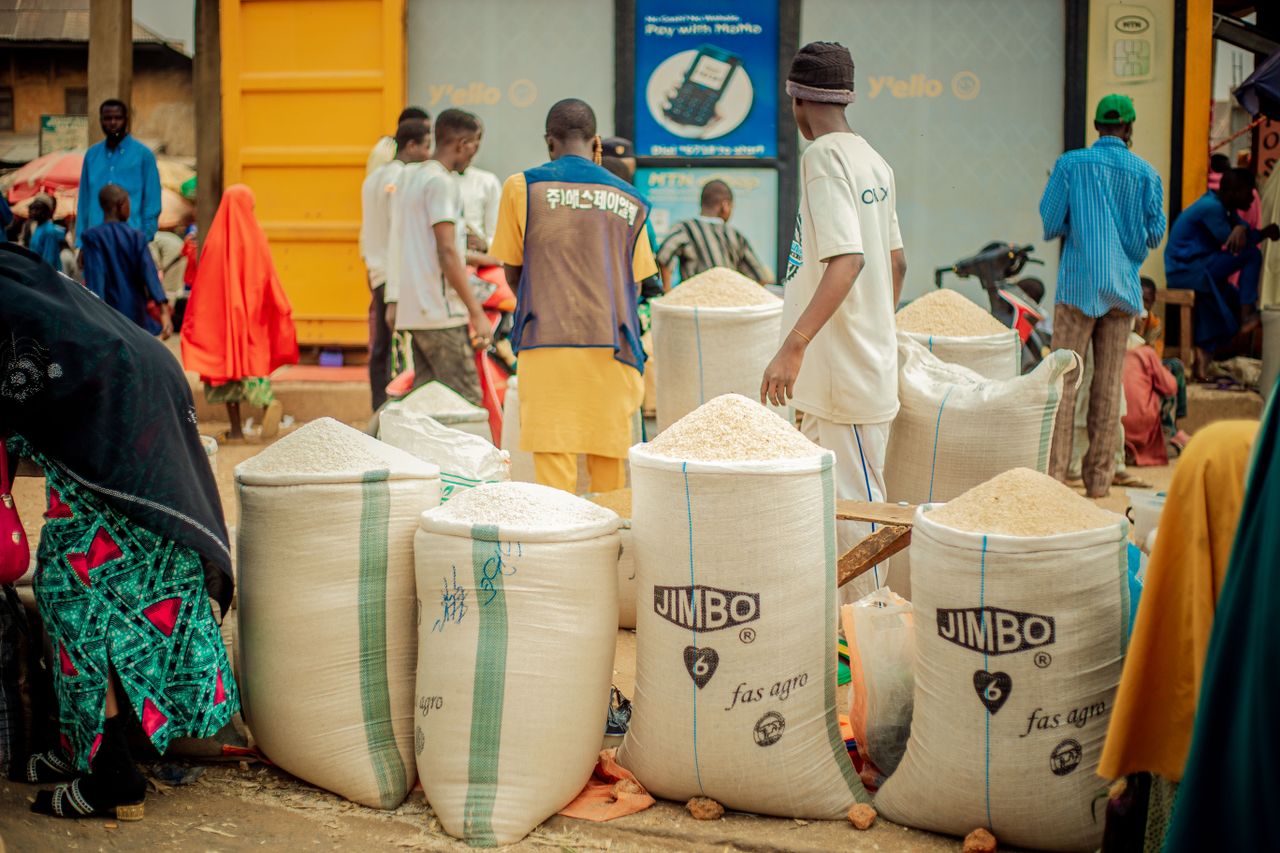
Food is one of the few things Nigerians cannot stop buying regardless of what is happening in the economy. Walk into any market across Lagos, Abuja, Port Harcourt, Uyo, Aba, Enugu, Kano, or Ibadan and you will notice something interesting. While many businesses struggle with inconsistent demand, foodstuff sellers continue serving customers every day because food is not a luxury. It is a necessity. Whether fuel prices rise, exchange rates fluctuate, or inflation pushes up the cost of living, people still need rice, beans, garri, yam flour, vegetable oil, spices, and other household staples.
That is exactly why the foodstuff business remains one of the most resilient businesses in Nigeria today, and this goes further to explain why many entrepreneurs, students, salary earners, retirees, and stay-at-home parents are turning to foodstuff trading as a reliable source of income.
However, there is a major difference between selling foodstuff and running a profitable foodstuff business.
Many people jump into the business simply because they hear stories about someone making huge profits from selling rice or beans. Unfortunately, they often discover later that poor pricing, bad location choices, lack of supplier relationships, and improper inventory management can quickly reduce profits.
That is why this guide goes beyond the basic advice you see online.
You will learn how the foodstuff business works in Nigeria, how much capital you need, where to source products, how to avoid common mistakes, and how to position yourself for long-term profitability.
Let’s start with understanding why this business continues to attract smart entrepreneurs across the country.
Why the Foodstuff Business Is Profitable in Nigeria
Many businesses depend heavily on trends, technology, or consumer preferences. Foodstuff does not.
People may postpone buying a new phone, delay purchasing furniture, or cancel entertainment subscriptions, but they cannot stop eating.
This creates what business experts call a consistent demand market.
According to data from the National Bureau of Statistics (NBS), food expenditure accounts for a significant portion of household spending in Nigeria. This means families spend a large percentage of their monthly income on food products.
For foodstuff sellers, this creates continuous opportunities throughout the year.
Reasons Many Nigerians Prefer the Foodstuff Business
- Constant demand throughout the year
- Can start with small capital
- Products are easy to understand
- Large customer base
- Multiple sales channels available
- Scalable from small to large operation
- Can be operated online and offline
Another advantage is flexibility.
You can start from a small roadside shop, operate from home, sell through WhatsApp, become a market retailer, or even build a large wholesale distribution network supplying restaurants, hotels, schools, and retailers.
The same business model can grow significantly over time if managed properly.
Understanding the Different Types of Foodstuff Businesses
One mistake many beginners make is assuming every foodstuff seller operates the same way.
In reality, there are several business models within the industry.
Choosing the right one depends on your budget, location, experience, and long-term goals.
1. Retail Foodstuff Business
This is the most common model.
You buy products from wholesalers and sell smaller quantities directly to consumers.
Examples include:
- Rice
- Beans
- Garri
- Vegetable oil
- Palm oil
- Semovita
- Yam flour
- Spices
- Seasoning cubes
- Sugar
- Salt
A typical neighbourhood foodstuff shop falls into this category.
For example, a retailer may buy a 50kg bag of beans and sell it in paint buckets, mudu measurements, or smaller portions. The profit often comes from breaking bulk quantities into retail units.
READ ALSO How to Start a Digital Products Business in Nigeria
2. Wholesale Foodstuff Business
Wholesalers buy directly from major suppliers, farmers, aggregators, or large distributors and then sell in larger quantities to retailers.
This model requires more capital but often produces higher overall revenue.
For example, a wholesaler may supply:
- Market traders
- Mini supermarkets
- Food vendors
- Restaurants
- Hotels
- School kitchens
Although profit margins per bag may sometimes be smaller than retail margins, wholesalers compensate through volume.
3. Online Foodstuff Business
This model has grown significantly in recent years.
Many Nigerians now order food items online and receive home delivery.
Instead of depending solely on walk-in customers, sellers use:
- WhatsApp Business
- Facebook Marketplace
- TikTok
- Personal websites
The interesting part is that some online sellers don’t even own physical shops.
They simply source products from trusted suppliers and arrange deliveries after receiving orders.
This can reduce startup costs substantially.
4. Specialty Foodstuff Business
Some entrepreneurs focus on specific products rather than selling everything.
Examples include:
- Rice distribution
- Beans supply
- Palm oil business
- Dried fish sales
- Spice trading
- Organic food products
Specialization often helps sellers become known for quality within a particular category.
How Much Capital Do You Need to Start a Foodstuff Business in Nigeria?
This is usually the first question most people ask.
The honest answer is that there is no fixed amount.
Your startup capital depends on the scale you want to operate.
Many successful foodstuff businesses started small and expanded gradually.
Starting With ₦50,000 to ₦100,000
This level is suitable for micro-retailing.
You can focus on fast-moving items such as:
- Garri
- Beans
- Rice
- Palm oil
- Seasonings
- Sugar
- Salt
At this stage, many entrepreneurs sell from home, roadside stalls, or through social media platforms.
The goal is not to stock everything but to focus on products with regular demand.
Starting With ₦200,000 to ₦500,000
This budget provides more flexibility.
You can stock multiple products and maintain better inventory levels.
For example:
- Several bags of rice
- Different varieties of beans
- Palm oil
- Groundnut oil
- Garri
- Semovita
- Spices
You may also be able to rent a small shop depending on your location.
Starting With ₦1 Million and Above
This opens the door to larger opportunities.
You can purchase directly from major distributors and agricultural markets while enjoying better pricing advantages.
Many wholesalers operate at this level because larger purchases often attract discounts that improve profitability.
Perhaps you may want to know how you can build funds to start up a business, you can READ our guide on How to build emergency funds
Step 1: Conduct Proper Market Research
One of the biggest reasons new businesses fail is poor market research.
People often assume that because food sells everywhere, every location will automatically generate profits.
Unfortunately, business does not work that way.
A successful foodstuff shop in one area may struggle badly in another area just a few kilometres away.
Before investing money, study your target market carefully.
Questions to Ask During Market Research
- What food products are most popular in the area?
- Who are the major competitors?
- What prices do they charge?
- How many foodstuff shops already exist nearby?
- What complaints do customers have?
- Which products run out frequently?
- What products are difficult to find?
For example, an area populated mainly by students may have stronger demand for affordable food items and smaller package sizes.
On the other hand, a middle-class residential estate may generate higher demand for convenience, packaged products, and home delivery services.
These differences matter because they influence what inventory you should stock.
Visit Markets Physically
Do not rely solely on assumptions.
Spend time visiting markets, observing customer behaviour, speaking with traders, and comparing prices.
Many successful entrepreneurs spent weeks researching before investing their first naira.
That preparation often saves them from expensive mistakes later.
Step 2: Choose the Right Location
Location can make or break a foodstuff business.
Even if your products are excellent, poor visibility and low customer traffic can limit sales.
Areas that often perform well include:
- Residential communities
- Busy market environments
- Bus stops
- High-traffic roads
- Areas near hostels
- Locations near schools
- Developing neighbourhoods
However, don’t automatically choose the busiest location without calculating costs.
Sometimes a shop with lower rent and moderate traffic can produce better profits than an expensive shop in a highly competitive market.
Many beginners focus only on visibility and forget to evaluate operating expenses.
A good location should balance customer access, affordability, security, and future growth opportunities.
Step 3: Find Reliable Foodstuff Suppliers
This is where many new foodstuff business owners either gain a competitive advantage or create problems for themselves.
The truth is simple. Two foodstuff sellers can operate in the same street, sell the same products, and still make completely different profits. In many cases, the difference comes down to where they buy their stock.
A seller buying directly from major markets, farmers, or distributors often enjoys better profit margins than someone buying from another retailer.
This is why supplier sourcing deserves serious attention before spending your startup capital.
Common Sources of Foodstuff in Nigeria
- Large commodity markets
- Farm cooperatives
- Agricultural aggregators
- Import distributors
- Local farmers
- Wholesale dealers
- Food processing companies
Depending on your location, some of Nigeria’s major foodstuff markets include Dawanau Market in Kano, Bodija Market in Ibadan, Mile 12 Market in Lagos, Ariaria Market in Aba, and Ogbete Main Market in Enugu.
These markets serve as major supply hubs for thousands of retailers across the country.
Before choosing a supplier, compare prices from multiple sources because the first supplier you meet may not necessarily offer the best deal.
Many experienced traders maintain relationships with several suppliers instead of relying on one person. This protects them whenever there are shortages, transportation issues, or sudden price increases.
Build Relationships, Not Just Transactions
One insider secret many beginners overlook is relationship building.
A supplier who trusts you may notify you about incoming stock, better deals, seasonal discounts, and market opportunities before competitors hear about them.
For example, if rice prices are expected to increase next week, a trusted supplier may alert you early enough to buy inventory before the increase takes effect.
Those small advantages can significantly improve profits over time.
Step 4: Register Your Foodstuff Business
Many small foodstuff businesses start informally, and while that may seem convenient initially, registering your business creates opportunities that become valuable as you grow.
Business registration improves credibility and also makes it easier to open a corporate bank account, apply for grants, access business loans, and work with larger organizations.
In Nigeria, business registration can be completed through the Corporate Affairs Commission (CAC).
For a small foodstuff business, a Business Name registration is usually sufficient during the early stages.
Imagine supplying food items to schools, hotels, restaurants, or corporate organizations. Many of them prefer dealing with registered businesses because it provides accountability and professionalism.
Even if you start small, thinking long-term from day one often pays off.
Step 5: Decide What Foodstuff Products to Sell
One mistake beginners make is trying to stock everything at once.
That approach sounds attractive until money becomes trapped in slow-moving inventory.
Smart business owners start with products that people buy regularly and then expand gradually based on customer demand.
Fast-Moving Foodstuff Products in Nigeria
| Product | Demand Level |
|---|---|
| Rice | Very High |
| Beans | Very High |
| Garri | Very High |
| Palm Oil | Very High |
| Vegetable Oil | High |
| Sugar | High |
| Salt | High |
| Semovita | High |
| Yam Flour | Moderate to High |
| Spices | Moderate to High |
The best approach is often to focus first on products that households purchase repeatedly every week or month.
For example, a customer may delay buying noodles or snacks, but rice, beans, palm oil, and garri remain regular household necessities.
Products with recurring demand help stabilize cash flow.
READ ALSO How to Invest 100K Naira in Nigeria: 9 Smart Ways to Make Profit
Understanding Seasonal Opportunities in the Foodstuff Business
One reason experienced traders make substantial profits is because they understand seasonal demand patterns.
Foodstuff prices rarely remain stable throughout the year.
Rainfall, harvest periods, transportation costs, fuel prices, exchange rates, and festive seasons all influence market prices.
Smart traders pay attention to these patterns and position themselves accordingly.
Examples of Seasonal Opportunities
- Rice demand often increases during Christmas and New Year celebrations.
- Beans prices may fluctuate between harvest seasons.
- Palm oil prices frequently change depending on production cycles.
- Ramadan often increases demand for specific food products.
- Easter and festive periods typically create higher household spending.
Imagine buying selected products before a major festive season and selling them when demand increases. Many successful traders use this strategy repeatedly throughout the year.
This is not speculation. It is simply understanding market behavior.
Step 6: Purchase Essential Equipment and Supplies
You do not need expensive equipment before starting.
However, certain basic items make daily operations smoother and more professional.
Important Equipment for a Foodstuff Shop
- Measuring bowls
- Paint buckets
- Digital weighing scale
- Storage containers
- Shelves
- Sacks and bags
- Calculator
- Record book
- Packaging materials
- Generator or alternative power source where necessary
A digital scale deserves special mention.
Customers appreciate accuracy, and inaccurate measurements can quickly damage trust.
Trust is one of the most valuable assets in the foodstuff business because repeat customers generate a large percentage of long-term revenue.
Step 7: Learn Basic Inventory Management
Many foodstuff businesses struggle not because sales are low but because inventory management is poor.
Inventory simply means tracking what comes into your shop and what leaves.
Without proper records, money starts disappearing quietly.
You may think you are making profits while stock losses, spoilage, theft, and pricing errors gradually eat into your earnings.
A Simple Inventory Example
Suppose you buy:
- 10 bags of rice
- 5 bags of beans
- 4 kegs of palm oil
If you fail to monitor daily sales properly, it becomes difficult to know your actual profit.
That is why successful traders maintain simple inventory records.
You can start with a notebook and later move to spreadsheets or inventory applications as the business grows.
First-In, First-Out (FIFO)
One useful inventory principle is First-In, First-Out.
This means older stock should be sold before newer stock.
The method helps reduce spoilage and quality issues, especially when dealing with products that may deteriorate over time.
Step 8: Set Competitive Prices Without Killing Your Profit
Pricing is one of the most misunderstood areas of the foodstuff business.
Many beginners either charge too much and lose customers or charge too little and destroy their profits.
The goal is balance.
Before setting prices, calculate:
- Purchase cost
- Transportation expenses
- Shop rent contribution
- Packaging costs
- Staff expenses
- Utility expenses
- Expected profit margin
For example, if transporting a bag of rice from a major market adds significant cost, that expense must be reflected in your pricing structure.
Many new traders forget indirect costs and later wonder why money is not accumulating despite steady sales.
A practical strategy is to monitor nearby competitors while also considering your operating costs.
You do not always need to be the cheapest seller.
Many customers happily pay slightly more when they trust product quality, accurate measurements, and good customer service.
Create a Simple Record-Keeping System
One habit separates long-term business owners from those who struggle year after year.
Record keeping.
Every sale, every expense, every stock purchase, and every transportation cost should be documented.
Without records, business decisions become guesswork.
Imagine spending ₦300,000 on inventory and earning ₦370,000 in sales.
At first glance, it appears you made ₦70,000 profit.
However, after accounting for transportation, rent, packaging, and other expenses, the actual profit may be very different.
Good records reveal the true financial picture.
Even a simple notebook can dramatically improve decision-making during the early stages of your business.
Step 9: Develop a Strong Customer Service Strategy
Most people assume customers buy foodstuff solely because of price.
Price matters, but it is rarely the only reason customers keep returning.
Many Nigerians have a preferred foodstuff seller even when another shop nearby sells at almost the same price.
The difference is often trust, convenience, and customer experience.
Think about it from the customer’s perspective.
If a trader consistently gives accurate measurements, sells clean products, treats customers respectfully, and remains honest about prices, customers naturally develop loyalty.
That loyalty becomes one of the most valuable assets in your business.
In fact, a loyal customer can generate revenue for years while also referring friends, neighbours, family members, and colleagues.
Simple Ways to Improve Customer Retention
- Use accurate measurements at all times.
- Maintain clean product storage.
- Respond politely to complaints.
- Offer assistance when customers need product recommendations.
- Provide delivery services where possible.
- Notify customers when fresh stock arrives.
- Build genuine relationships with regular buyers.
For example, if a customer regularly buys beans every month and you notice a fresh batch has arrived, sending a quick WhatsApp message can strengthen that relationship.
Small gestures often create big business advantages.
Step 10: Use Social Media to Grow Your Foodstuff Business
One of the biggest mistakes many foodstuff sellers make is relying entirely on walk-in customers.
Meanwhile, thousands of Nigerians now discover businesses through social media every day.
You do not need expensive advertising before getting results.
Even a simple smartphone can help you attract customers beyond your immediate neighbourhood.
Best Platforms for Foodstuff Marketing
- WhatsApp Business
- TikTok
- Google Business Profile
WhatsApp Business deserves special attention because many Nigerian customers already use WhatsApp daily.
You can upload product photos, create a catalogue, display prices, and communicate directly with buyers.
The official platform can be accessed through WhatsApp Business.
Meanwhile, creating a free business profile on Google Business Profile can help nearby customers find your shop when they search online.
Imagine someone searching “foodstuff shop near me” and your business appears among the results. That visibility can generate sales without ongoing advertising costs.
Take Advantage of Home Delivery Services
Consumer behaviour has changed significantly in recent years.
Many busy professionals, parents, and business owners prefer convenience over spending hours visiting markets.
This creates opportunities for foodstuff sellers willing to offer delivery services.
You do not necessarily need to own a vehicle.
Many businesses partner with local dispatch riders and delivery companies.
For instance, a customer living in Abuja may prefer ordering rice, beans, palm oil, and garri through WhatsApp rather than visiting a crowded market.
If you can simplify the buying process, you immediately stand out from competitors who still depend solely on physical traffic.
How to Package Foodstuff Professionally
Packaging influences customer perception more than many people realize.
Two sellers may offer identical products, yet customers often perceive the neatly packaged option as more valuable.
This is especially true when targeting middle-income households and online buyers.
Benefits of Proper Packaging
- Improves product presentation.
- Enhances customer confidence.
- Reduces contamination risks.
- Makes transportation easier.
- Encourages repeat purchases.
- Creates branding opportunities.
For example, instead of selling garri loosely, you could package it into 1kg, 2kg, and 5kg bags with simple labels.
The product immediately appears more professional, and customers often appreciate the convenience.
Understanding Profit Margins in the Foodstuff Business
This is one area where many beginners become confused.
Not every product generates the same profit margin.
Some products move quickly with lower margins while others move more slowly with higher margins.
Successful traders understand this balance and build their inventory accordingly.
Factors That Influence Profit Margins
- Supplier pricing
- Transportation costs
- Seasonal demand
- Storage costs
- Competition levels
- Location
- Customer demographics
For example, breaking a large bag of beans into smaller retail quantities often produces a better margin than selling the entire bag wholesale.
Likewise, repackaging products into consumer-friendly sizes may increase profitability while also improving convenience for customers.
The key is monitoring actual results rather than making assumptions.
Common Mistakes New Foodstuff Business Owners Make
Learning from other people’s mistakes can save significant money and frustration.
Many foodstuff businesses fail not because the industry is bad but because avoidable errors gradually weaken the operation.
1. Starting Without Market Research
Some people rent a shop simply because a space becomes available.
Then they discover later that demand is low or competition is overwhelming.
Research should always come before investment.
2. Buying Too Much Inventory Initially
Excitement often pushes beginners to stock every available product.
Unfortunately, this ties up capital and increases the risk of slow-moving inventory.
Start strategically and expand gradually.
3. Ignoring Record Keeping
Many traders know how much stock they purchased but cannot accurately calculate monthly profits.
Without records, financial decisions become dangerous guesswork.
4. Depending on One Supplier
Supplier problems can disrupt business operations unexpectedly.
Maintaining multiple supplier relationships creates stability and flexibility.
5. Mixing Business Money with Personal Spending
This is one of the most common causes of business stagnation.
When business funds constantly cover personal expenses, growth becomes difficult.
Separate business finances from household finances as much as possible.
How to Stand Out from Competitors
Competition exists in virtually every profitable industry, and foodstuff trading is no exception.
However, standing out does not necessarily require massive investment.
Sometimes small improvements create significant advantages.
READ ALSO How to Start Affiliate Marketing in Nigeria as a Beginner in 2026
Practical Differentiation Strategies
- Offer home delivery.
- Maintain cleaner product displays.
- Use professional packaging.
- Create loyalty rewards.
- Provide consistent customer service.
- Use social media actively.
- Stock hard-to-find products.
Consider a simple example.
Imagine two foodstuff shops operating side by side.
One shop merely waits for customers while the other actively updates WhatsApp status, offers delivery, sends stock updates, and packages products professionally.
Over time, the second business often builds stronger customer loyalty and generates higher sales.
How to Scale Your Foodstuff Business
Once your business begins generating consistent sales, the next challenge becomes growth.
Many traders remain stuck at the same level for years because they focus only on daily transactions without planning expansion.
Growth usually happens through deliberate steps.
Expansion Options
- Increase product variety.
- Add wholesale operations.
- Open additional locations.
- Supply restaurants and hotels.
- Supply schools and hostels.
- Create packaged foodstuff brands.
- Launch online ordering systems.
For example, a trader who initially serves households may eventually begin supplying restaurants, caterers, and food vendors.
Because these customers often purchase larger quantities, revenue potential increases significantly.
Some of Nigeria’s most successful food distributors started with a single small shop before gradually building larger supply networks.
Why Patience Matters in the Foodstuff Business
One reality many new entrepreneurs underestimate is that business growth takes time.
The first few months often involve learning customer preferences, understanding inventory cycles, identifying reliable suppliers, and refining pricing strategies.
This learning phase is normal.
Instead of focusing only on immediate profits, concentrate on building systems, customer trust, and operational efficiency.
Businesses that survive the early stages often become much stronger because the owners develop experience that cannot be learned from theory alone.
In the foodstuff industry, consistency frequently beats speed.
A business that grows steadily while maintaining healthy cash flow usually performs better over the long term than one that expands too aggressively without proper planning.
Step 11: Understand the Risks in the Foodstuff Business and How to Manage Them
Every profitable business comes with risks, and the foodstuff business is no different.
The good news is that most of the common risks can be managed if you understand them early enough.
Many beginners focus entirely on making sales while ignoring the factors that can quietly reduce profits. The result is often frustration because the business appears busy on the surface, yet the actual earnings remain disappointing.
Understanding potential challenges before they happen allows you to prepare rather than react.
Price Fluctuation
Foodstuff prices in Nigeria can change unexpectedly.
Fuel costs, transportation expenses, weather conditions, exchange rate movements, and supply shortages all influence market prices.
A bag of rice purchased today may cost significantly more or less a few weeks later.
This is why successful traders monitor market trends regularly instead of waiting until prices change.
Building strong supplier relationships also helps because suppliers often provide early information about upcoming market movements.
Product Spoilage
Although many foodstuff products have relatively long shelf lives, improper storage can still cause losses.
Beans, rice, garri, spices, dried fish, and other products can deteriorate if exposed to moisture, pests, or poor handling.
Investing in proper storage conditions helps protect inventory and maintain product quality.
Theft and Inventory Loss
Small daily losses can accumulate into significant amounts over time.
Without proper inventory tracking, missing stock may go unnoticed.
Regular stock counts and proper record keeping reduce this risk considerably.
Competition
Competition is unavoidable because foodstuff remains a popular business sector.
However, competition should not be viewed as a threat.
Instead, it should encourage you to improve your service quality, customer experience, product presentation, and business systems.
Many customers willingly remain loyal to businesses that consistently deliver value.
How Much Can You Make from a Foodstuff Business in Nigeria?
This is usually the question people ask immediately after deciding to start.
The honest answer is that earnings vary widely depending on several factors.
Location, startup capital, product selection, supplier pricing, operating costs, customer volume, and business management all affect profitability.
There is no fixed income because every business operates under different circumstances.
For example, a small home-based seller operating with ₦100,000 capital will likely generate different results from a wholesaler handling several million naira worth of inventory.
Likewise, a trader located in a densely populated residential area may experience different sales volumes compared to someone operating in a low-traffic environment.
The businesses that often earn the most are not necessarily the ones with the biggest shops.
They are usually the ones with efficient inventory management, reliable suppliers, strong customer relationships, and disciplined financial habits.
Building Multiple Income Streams Within Your Foodstuff Business
One strategy that helps many foodstuff entrepreneurs increase revenue is creating complementary income streams.
Rather than depending on one source of profit, they gradually introduce related products and services.
Examples of Additional Revenue Opportunities
- Foodstuff home delivery services
- Wholesale distribution
- Food repackaging
- Supply contracts with restaurants
- Supply contracts with schools
- Supplying food vendors
- Selling cooking ingredients and spices
- Online foodstuff ordering services
Consider a simple example.
A customer ordering rice may also need beans, vegetable oil, seasoning cubes, and garri.
When you stock complementary products, the average value of each transaction often increases naturally.
This is one reason supermarkets and successful foodstuff shops try to offer related items together.
The Importance of Reinvesting Profits
One mistake that slows business growth is withdrawing profits too quickly.
When a business starts generating income, the temptation to spend most of the earnings immediately can be strong.
However, businesses grow faster when a portion of profits is reinvested.
Reinvestment can help you:
- Increase inventory levels.
- Purchase higher-demand products.
- Improve packaging.
- Expand storage capacity.
- Launch marketing campaigns.
- Add delivery services.
- Upgrade business equipment.
Many successful entrepreneurs built substantial businesses not because they started with huge capital but because they consistently reinvested profits over time.
Growth often happens gradually and then becomes noticeable after months or years of disciplined execution.
Real-Life Example of a Small Foodstuff Business Growth Journey
Imagine someone starting with ₦150,000.
Instead of attempting to stock dozens of products, they focus on a few fast-moving essentials such as rice, beans, garri, palm oil, and seasoning products.
They carefully track sales, maintain good customer relationships, and source inventory from reliable suppliers.
As profits begin to accumulate, they gradually expand their product range.
A few months later, they introduce delivery services.
Eventually, they begin supplying food vendors and small restaurants within their area.
Over time, the business evolves from a simple retail operation into a broader distribution network.
This pattern is common across many successful foodstuff businesses in Nigeria.
The growth may appear slow initially, but consistency often produces impressive long-term results.
Conclusion
The foodstuff business remains one of the most practical and resilient business opportunities available in Nigeria because food is a basic necessity that people purchase continuously.
However, profitability does not happen automatically.
Success usually comes from understanding your market, choosing the right products, building supplier relationships, managing inventory effectively, maintaining excellent customer service, and making smart financial decisions.
The most successful foodstuff entrepreneurs rarely rely on luck.
They pay attention to details, monitor market trends, maintain discipline, and focus on serving customers consistently.
If you approach the business with patience and a willingness to learn, even a modest starting capital can become the foundation for a much larger enterprise over time.
The journey may begin with a few bags of rice, beans, or garri, but with the right systems and mindset, it can eventually grow into a business that serves hundreds or even thousands of customers.