
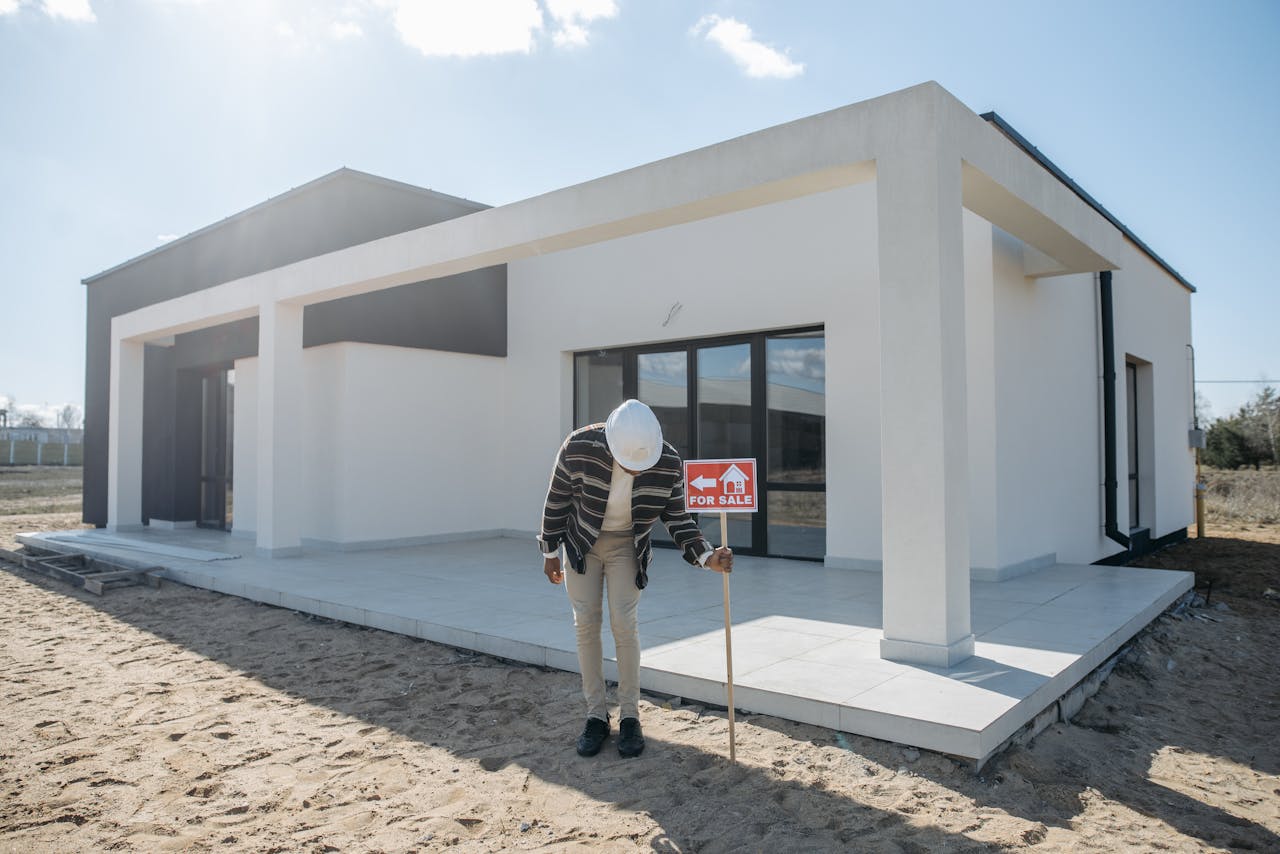
That confusion is real and important. Real estate in Nigeria is not as straightforward as people make it sound. There are hidden costs, unclear documentation, land disputes, and a lot of noise from agents who only tell you the attractive part of the story.
What is Real Estate Investment?
Real estate investment means putting money into property such as land, houses, or buildings with the expectation that it will generate income or increase in value over time.
But in Nigeria, it goes deeper than that.
It’s not just about “buy land, wait, and sell.” That idea is everywhere, but it’s incomplete.
Real estate here is influenced by:
- Government policies
- Urban development trends
- Infrastructure (roads, electricity, drainage)
- Documentation legitimacy
- Population movement (where people are relocating to)
So when people say “real estate is profitable,” what they really mean is: real estate rewards people who understand location, timing, and documentation.
Why Many Nigerians Are Turning to Real Estate
If you look closely, more young Nigerians are quietly moving into real estate, even those who don’t have huge capital.
Here’s why:
1. It Feels More Tangible Than Online Investments
Unlike crypto or stocks, land is something you can physically see. For many, that reduces emotional uncertainty.
2. Inflation Protection
With the naira constantly fluctuating, holding money in cash can easily lose value. Property, especially in developing areas, tends to rise with inflation.
3. Flexible Entry Points
Contrary to popular belief, you don’t always need millions to start. Some lands are sold in installments.
4. Multiple Income Paths
Real estate is not one thing. You can earn through:
- Land flipping
- Rental income
- Short-let apartments
- Leasing land
Types of Real Estate Investment in Nigeria
Understanding your options for the types of real estate investment is where clarity begins.
1. Land Banking
This is the most common entry point.
You buy land in a developing area and hold it until the value increases.
Example:
Someone bought land in Ibeju-Lekki for ₦500,000 in 2020. By 2025, due to development (Dangote Refinery, road expansion), that same land may sell for ₦3,000,000 and above.
Reality Check:(what you should know)
- Growth is not instant
- Location determines everything
- Some lands never appreciate if development doesn’t come
2. Rental Properties
You build or buy a house and rent it out.
Types:
- Single rooms (face-me-I-face-you)
- Self-contained apartments
- Flats
Example:
If you rent out a 2-bedroom flat in Port-Harcourt for ₦600k annually, you can generate a steady income if occupancy is stable.
Reality Check:
- Maintenance costs exist
- Tenant issues are there
- Vacancy periods can affect income
3. Short-Let Apartments (Airbnb Style)
This is growing fast in cities like Lagos, Abuja, and Port Harcourt.
Instead of renting yearly, you rent daily or weekly.
Example:
A short-let apartment in Lekki can generate ₦25,000–₦80,000 per night depending on quality and location.
Reality Check:
- Requires furnishing and marketing
- Management can be demanding
- Income fluctuates with demand
4. Real Estate Investment Platforms
Some Nigerian platforms allow you to invest smaller amounts into property projects.
Examples include fractional ownership or crowdfunding.
For more context on investment platforms, you can READ ALSO: The Best Investment Apps for beginners in Nigeria
Reality Check:
- Returns are not guaranteed
- Platform credibility matters
- You don’t have physical control of the property
5. Commercial Real Estate
This includes:
- Shops
- Office spaces
- Warehouses
Example:
A shop in a busy market area can generate consistent rent due to business activity.
Reality Check:
- Higher capital required
- Economic conditions affect tenants
Now that you understand the types of real estate investments, the next thing that matters is cost.
But even with all these opportunities, there are risks most beginners don’t see early.
How long investment return take
- Land banking takes about 2 to 5 years to yield a very good return
- Rental income is a yearly cash flow
- Short-let depends on occupancy
Comparison Table of investment types
- Land banking is low effort but slow returns
- Rental property gives steady income but requires management
- Short-term has higher income potential but higher stress
How to Start Real Estate Investment in Nigeria (Step-by-Step)
To start investing in Real Estate in Nigeria, the following steps are considered:
Step 1: Define Your Entry Level
Before anything, ask yourself:
- How much can I realistically invest?
- Am I looking for short-term profit or long-term growth?
There’s no point forcing yourself into a ₦5,000,000 deal when your financial reality is ₦300,000. Start where you are.
Step 2: Understand Location (This Is Everything)
In Nigerian real estate, location is not just about “Lagos vs Abuja.” You should check:
- If the road is accessible
- Nearby developments
- Government projects
- Population growth
Example:
Two lands in the same state can have completely different values depending on the access road and proximity to development.
Step 3: Verify Land Documents
This is where many beginners make costly mistakes.
Common documents include:
- Certificate of Occupancy (C of O)
- Governor’s Consent
- Deed of Assignment
- Survey Plan
Always verify with:
- A lawyer
- Surveyor
- Land registry
You can verify land ownership through official government platforms such as the Lagos State Lands Bureau landsbureau.lagosstate.gov.ng
Recent reports from platforms like Nairametrics show increasing demand for housing in urban areas. To know more, VISIT nairametrics.com
Step 4: Work With Trusted Sources
Avoid emotional buying.
If an agent is rushing you with “This land will finish today!” don’t buy it. That’s pressure, not opportunity.
Take your time and verify everything.
Step 5: Start Small and Learn
Your first deal is not about maximizing profit.
It’s about understanding:
- Documentation
- Process
- Hidden costs
Think learning first, then profit later.
How to Invest in Real Estate in Nigeria as a Beginner
As a beginner, you can:
- Start with land if capital is low
- Consider installment-based estates
- Work with verified developers
- Visit the land physically.
These will reduce doubt and risks of investment scams.
How Much Do You Need to Start Real Estate in Nigeria?
You do not really need a huge amount of money to start a real estate investment. You can actually start with:
- ₦100k – ₦500k for land in rural or developing areas
- ₦500k – ₦2M for semi-developed areas
- ₦2M+ for urban/peri-urban
Cost Breakdown of Real Estate Investment in Nigeria
- Initial Land Cost
- Hidden Charges Beginners Ignore
- Legal and Documentation Fees
for instance,
- A buyer pays for land without checking the survey coordinates
- Later discovers the land overlaps another plot
- Someone buys cheap land, only to find out it is under government acquisition
Many beginners only focus on the land price and that’s incomplete.
Other costs include:
- Survey plan
- Deed of assignment
- Legal fees
- Agency fees
- Development levy
Sometimes these add 30%–50% extra to the land cost.
Example for a ₦1M land:
- Land price: ₦1,000,000
- Survey: ₦150,000
- Deed: ₦100,000
- Agency fee: ₦100,000
- Development levy: ₦200,000
Total: ₦1,550,000
Common Mistakes Beginners Make (And Why They Hurt)
Some Beginners often make these mistakes:
1. Buying “Cheap Land” Without Asking Questions.
By doing so, you are actually buying disputed land because it may either be that it has no accessible road or it’s a government-acquired land
2. Ignoring Documentation
A land without proper documentation is a liability, not an asset. Always seek verifiable documents before investing.
3. Following Hype Locations Blindly
Just because everyone is talking about a place doesn’t mean it fits your strategy. Investigate before proceeding.
4. Expecting Quick Profit
Real estate is not always fast money. It rewards patience more than urgency. It can take up to a good number of 2-5 years depending on the location and the market price inflation.
How People Actually Make Money in Nigerian Real Estate
Investors make money by:
1. Buying Before Development Reaches an Area
Early entry is where most gains happen.
2. Adding Value
- Fence land
- Build basic structures
- Improve accessibility
These will naturally increase the value and price of the land.
3. Holding Long Enough
Time is a major factor. People who benefit most are those who wait longer. Not when the value appreciates, you rush and sell.
Is Real Estate Still Profitable in Nigeria in 2026?
Definitely yes, but not blindly.
- Where you buy
- How you buy
- What you understand
Nigeria’s population is growing, urban areas are expanding, and housing demand is increasing.
But at the same time:
- Scams exist
- Poor planning exists
- Bad investments also exist
So profitability is not automatic.
Realistic Expectations as a Beginner
As a Beginner, you should expect the following:
- Your first investment may not double quickly
- You will likely make a few mistakes
- You will learn more from experience than from theory
That’s normal.
Safer Alternatives If You Are Not Ready Yet
If real estate feels too heavy right now, that is….you cannot afford it, you can start by first understanding money better.
Before committing money to property, understanding how to manage your income matters. You can start here to learn how you can Create a Monthly Budget plans as a Beginner
This connects closely with how successful investors think.
To know the habbits of a highly successful investors in Nigeria, READ ALSO: Habits of Successful Investors in Nigeria
The truth is that real estate is not just about property. It’s about how you think about money.
Beginner Strategy for Entering Real Estate in Nigeria
Example:
If you have ₦300,000 to ₦700,000, focus on
- Land in developing areas
- Use installment plans
- Avoid high-risk deals
- If you have ₦1,000,000 to ₦3,000,000
- Consider semi-developed areas
- Look for verified estate projects
Frequently Asked Questions (FAQs)
1. What is the safest way to invest in real estate in Nigeria as a beginner?
The safest way to start is by focusing on properties with verified documentation and buying through trusted developers or registered agents. Beginners often reduce risk by starting with estate lands that already have survey plans and clear ownership records.
2. How do I know if a land is genuine in Nigeria?
You can confirm land authenticity by checking the survey plan, verifying ownership at the land registry, and working with a qualified lawyer or surveyor. It is also important to confirm that the land is not under government acquisition.
3. Which state is best for real estate investment in Nigeria?
Lagos remains one of the most active real estatea markets due to high demand and infrastructure development. However, areas in Ogun, Abuja, Port Harcourt, Enugu, and Ibadan are also attracting attention due to expanding urban growth and relatively lower entry costs.
4. Can real estate make you rich in Nigeria?
Real estate can contribute to long-term wealth building, especially when investments are made in the right locations and held over time. However, it is not an instant path to wealth and requires patience, proper research, and consistency.
5. How long does it take to make profit from land in Nigeria?
Profit timelines vary depending on location and development. In some cases, land may appreciate within 2 to 5 years, especially in areas experiencing rapid infrastructure growth. In slower regions, it may take longer.
6. Is it better to buy land or build a house in Nigeria?
Buying land is often the first step for beginners because it requires less capital. Building a house involves higher costs but can generate rental income. The better option depends on your financial capacity and long-term goals.
7. What documents should I collect after buying land in Nigeria?
After purchase, you should receive documents such as the deed of assignment, survey plan, and any existing title documents like a Certificate of Occupancy or Governor’s Consent. These documents prove ownership and protect your investment.
8. Are installment land payments safe in Nigeria?
Installment payments can be safe if done through credible real estate companies with a proven track record. However, buyers should still verify land documents and ensure all agreements are properly documented.
9. What is the difference between C of O and Governor’s Consent?
A Certificate of Occupancy is an official document issued by the government confirming land ownership. Governor’s Consent is required when ownership of land with an existing C of O is transferred from one person to another.
10. Can I invest in real estate in Nigeria while living abroad?
Yes, many Nigerians in the diaspora invest in property through trusted agents, developers, or family representatives. However, proper verification and documentation are essential to avoid fraud.
11. What is land banking in Nigeria and is it profitable?
Land banking involves buying land in undeveloped areas and holding it until its value increases. It can be profitable if the location experiences development, but it requires patience and proper location research.
12. What are the hidden costs of buying land in Nigeria?
Hidden costs may include survey fees, legal fees, agency commissions, development levies, and documentation charges. These can significantly increase the total cost beyond the initial land price.
13. Is real estate better than other investments in Nigeria?
Real estate is one of several investment options available in Nigeria. It is valued for its stability and long-term potential, but it requires more capital and patience compared to some other investment types.
14. Can I start real estate investment with ₦500,000 in Nigeria?
Yes, it is possible to start with ₦500,000 by targeting land in developing areas or using installment plans offered by some real estate companies. However, options may be limited to less developed locations.
15. How do real estate agents make money in Nigeria?
Real estate agents earn commissions by connecting buyers and sellers. Their commission is typically a percentage of the property value and is paid once a transaction is completed.
Final Thoughts
Real estate in Nigeria is not about rushing into deals or following trends. It is about understanding where growth is happening, verifying every detail, and making decisions without pressure.
People lose money when they move fast without clarity. People build wealth when they move with patience and awareness.
Real estate investment in Nigeria is not a magic path to wealth. It’s a system.
A system that rewards:
- Patience
- Awareness
- Due diligence
And punishes:
- Rush
- Ignorance
- Blind trust
If you take anything from this, let it be this:
You don’t need to rush into real estate. You need to understand it well enough to move without pressure.
Because in this space, the people who win are not always the richest, they are the ones who see clearly before they act.