
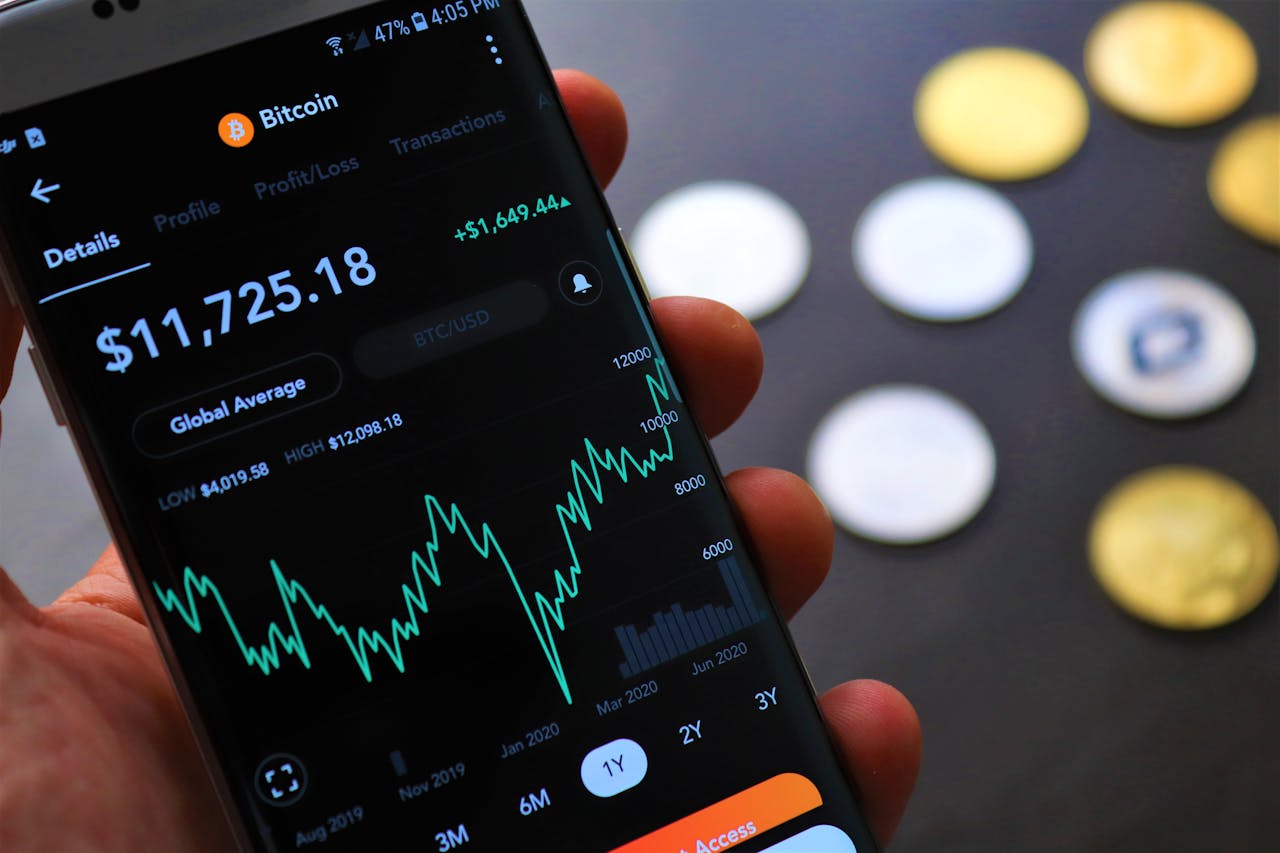
If someone had told many Nigerians a few years ago that people would be making financial decisions from their phones using digital currencies, most would have laughed it off and moved on with their day. Yet today, cryptocurrency trading has quietly become one of the most talked-about financial opportunities across Nigeria and beyond.
Students are learning it, business owners are diversifying into it, and remote workers are using it to receive payments globally. However, alongside the opportunities, there is also a long trail of people who entered without understanding how it works and ended up losing money quickly.
This is exactly why learning cryptocurrency trading properly in 2026 is no longer optional if you want to participate meaningfully in the digital economy.
At its core, crypto trading is not a shortcut to instant wealth, even though social media often makes it look that way. Instead, it is a skill built on patience, discipline, and a clear understanding of how financial markets behave over time.
This guide breaks everything down step by step so that even if you are starting from zero, you can gradually understand how traders think, how the market moves, and how people build consistency over time.
By the end of this article, you will understand what cryptocurrency trading really means, why many beginners struggle, the core skills required, and how to start learning without exposing yourself to unnecessary losses.
What Cryptocurrency Trading Really Means
Cryptocurrency trading simply refers to buying and selling digital currencies with the intention of making profit from price movements. In other words, you are trying to take advantage of the difference between a coin’s buying price and selling price.
For example, if Bitcoin is purchased at a lower price and later sold at a higher price, the difference becomes profit. On paper, this looks straightforward, but in reality, the challenge is not in the buying or selling itself.
The real difficulty lies in understanding timing, market behavior, and emotional discipline because these three factors determine whether a trader succeeds or consistently loses money.
Many beginners enter the market thinking it is purely about prediction, but experienced traders understand that it is more about probability, risk control, and patience over time.
Why Cryptocurrency Trading Continues to Grow in 2026
Despite market ups and downs, cryptocurrency adoption continues to expand globally. Major exchanges and financial platforms such as Binance have recorded steady growth in user participation, while institutional interest has also increased over the years.
Reports from blockchain analytics platforms like Chainalysis consistently show that adoption is not slowing down, especially in developing economies where people are looking for alternative financial systems.
In Nigeria, the interest is even more visible. Many people use crypto for different practical reasons, including protection against inflation, access to global payments, and participation in online business opportunities that require cross-border transactions.
This continued growth is one of the reasons more people are actively trying to understand how trading works, rather than simply buying and holding without strategy.
Related Article How to Buy Cryptocurrency for Beginners in 2026/2027(Step-by-Step)
Can Beginners Still Learn Crypto Trading in 2026?
The simple answer is yes, but the experience has changed compared to earlier years. In the past, information was scattered and unreliable, and many beginners depended on social media groups or unverified sources for guidance.
Today, the situation has improved significantly because there are structured learning platforms, demo accounts, trading simulators, and professional educational content available across multiple channels.
However, the challenge has shifted from lack of information to too much information. Beginners are now exposed to thousands of strategies, opinions, and “quick profit” claims, which often creates confusion instead of clarity.
This is why learning crypto trading now requires not just access to information, but the ability to filter noise and focus on foundational principles that actually matter in the long run.
Core Skills You Need Before You Start Trading
Before opening any trading account or buying your first coin, it is important to understand that trading is not a single skill but a combination of several interconnected abilities.
1. Understanding the Market
You need to understand what cryptocurrencies are, how they function, and why their prices move up or down. Without this foundation, every decision becomes guesswork rather than informed analysis.
Market understanding also includes awareness of factors such as demand, supply, news events, and investor sentiment, all of which influence price movement in subtle but powerful ways.
2. Technical Analysis
Technical analysis involves studying price charts to identify patterns and possible future movements. This includes concepts such as support and resistance, trend direction, and candlestick behavior.
Although it may seem complex at first, it becomes easier with practice and consistent exposure to real market charts over time.
3. Risk Management
This is one of the most important aspects of trading because even the best strategies can fail in certain market conditions.
Risk management involves deciding how much capital to risk per trade, setting stop losses, and ensuring that one bad trade does not destroy your entire account.
4. Emotional Discipline
Emotions play a major role in trading outcomes. Fear and greed often push beginners into poor decisions such as exiting trades too early or holding losing positions for too long.
Developing emotional discipline allows a trader to follow a plan consistently rather than reacting impulsively to market movements.
Common Types of Cryptocurrency Trading
Cryptocurrency trading is not limited to one style, and understanding different approaches helps you choose what fits your lifestyle and personality.
Day Trading
Day trading involves opening and closing trades within the same day. It requires constant attention, quick decision-making, and strong focus.
Swing Trading
Swing trading involves holding positions for several days or weeks, making it more flexible for people who cannot monitor the market constantly.
Position Trading
This style focuses on long-term trends and may involve holding assets for months depending on market conditions.
Scalping
Scalping involves making multiple small trades within short time intervals, which requires experience and fast execution skills.
Common Mistakes Beginners Make
Many people lose money in crypto not because the market is unfair, but because they approach it without preparation or structure.
One common mistake is starting with real money too early without practicing on demo accounts. Another is relying heavily on social media opinions instead of personal analysis.
Some beginners also enter the market using borrowed funds, which increases pressure and often leads to emotional decision-making.
Perhaps the most damaging mistake is ignoring education entirely and expecting profits purely from luck or guessing market direction.
How to Start Learning Cryptocurrency Trading in 2026 (Step-by-Step Roadmap)
Now that you understand what cryptocurrency trading actually means and why so many people struggle with it, the next question becomes more practical. How exactly do you start learning without burning your money within the first two weeks?
The truth is, most beginners do not fail because crypto is complicated. They fail because they jump steps. They skip the foundation, rush into trading, and then blame the market when reality does what reality always does.
If you approach it properly, however, learning crypto trading becomes structured, predictable, and surprisingly logical. The process below is how most consistent traders quietly build skill before anyone even notices they are serious.
READ ALSO How to Buy Cryptocurrency as a Beginner in 2026/2027(Step-by-Step)
Step 1: Learn the Basics Before You Touch Any Exchange
Before downloading any trading app, you need to understand how the ecosystem works. That includes what cryptocurrencies are, how blockchain functions, and why exchanges exist in the first place.
This is where many people get impatient, because it feels like “theory.” But skipping this stage is exactly why beginners later panic when prices move unexpectedly.
At a minimum, focus on understanding:
- What Bitcoin, Ethereum, and stablecoins actually represent
- How blockchain technology verifies transactions
- The difference between centralized and decentralized exchanges
- Why price volatility exists in crypto markets
You don’t need to become a developer, but you do need enough clarity to stop seeing crypto as magic internet money.
Step 2: Choose a Reliable Cryptocurrency Exchange
Once the basics make sense, the next step is selecting where you will actually trade. This decision matters more than most beginners realize, because your exchange is your gateway to the entire market.
Popular platforms used globally include Binance and Bybit, both of which offer trading tools, charts, and beginner-friendly interfaces.
For Nigerians specifically, Binance remains one of the most widely used platforms because of its peer-to-peer (P2P) system, which allows users to buy and sell crypto using Naira.
When choosing an exchange, you should consider:
- Security and reputation
- Ease of deposit and withdrawal in Nigeria
- Trading fees
- Availability of demo or futures accounts
At this stage, you are not trying to become profitable. You are simply setting up your workspace.
Step 3: Learn How to Read Charts (Without Panicking)
Now comes the part that scares most beginners: charts.
At first glance, crypto charts look like random green and red candles fighting for dominance like a chaotic argument you didn’t sign up for. But once you understand the structure, it becomes much easier to interpret.
You will need a charting platform such as TradingView, which is widely used by both beginners and professional traders.
Start by focusing on the basics:
- Candlesticks (what green and red actually mean)
- Timeframes (1H, 4H, Daily charts)
- Support and resistance zones
- Market trends (uptrend, downtrend, sideways movement)
The goal here is not prediction. The goal is recognition. You are training your eyes to understand what the market is doing in real time.
Step 4: Practice With a Demo Account Before Real Money
This is where discipline quietly separates serious learners from emotional beginners.
A demo account allows you to trade with fake money while experiencing real market conditions. It is one of the safest ways to build skill without financial pressure.
Most exchanges like Binance and Bybit offer demo or testnet environments where you can practice placing trades, setting stop losses, and testing strategies.
During this phase, your goal is not profit. Your goal is consistency in decision-making.
If you cannot trade profitably on a demo account, real money will only accelerate your mistakes.
Step 5: Understand Risk Before You Chase Profit
At this stage, many beginners become overconfident because they see a few successful demo trades. This is usually where problems begin.
Real trading is not about how many times you win. It is about how much you lose when you are wrong.
Professional traders think in terms of risk first, not profit first. That means every trade is planned around what they are willing to lose, not what they hope to gain.
Basic risk principles include:
- Never risk more than a small percentage of your account on a single trade
- Always use stop-loss orders
- Avoid emotional trading decisions
- Do not enter trades without a clear plan
In Nigeria, many beginners ignore this stage completely and focus only on “multiplying money.” Unfortunately, the market does not reward urgency. It rewards structure.
Step 6: Start Tracking Your Trades (Trading Journal)
If you treat trading seriously, then your decisions should not disappear into thin air after each trade.
A trading journal is simply a record of your trades, including why you entered, why you exited, and what you learned.
This might sound simple, but it is one of the most powerful tools for improvement.
Your journal should include:
- Entry price and exit price
- Reason for entering the trade
- Outcome (profit or loss)
- Emotional state during the trade
Over time, patterns begin to appear. You will notice mistakes you repeat and strategies that work more consistently than others.
Step 7: Start Small With Real Money (Only After Practice)
After sufficient practice, you can begin trading with small real capital. This is where most learners finally transition into real market experience.
The key here is “small.” Not life savings. Not rent money. Not money you cannot afford to lose.
Start with an amount that allows you to focus on learning instead of panicking.
The goal at this stage is emotional adjustment. Real money introduces pressure that demo accounts cannot replicate.
What Beginners Should Focus on at This Stage
At this point, your focus should not be on making profits. Instead, your attention should shift toward building habits that support long-term consistency.
That includes:
- Following your trading plan
- Avoiding impulsive trades
- Learning from losses instead of reacting emotionally
- Improving chart interpretation skills
This stage often feels slow, but it is where real traders are quietly formed while everyone else is chasing quick wins.
How Cryptocurrency Trading Strategies Actually Work in 2026
By the time a beginner reaches this stage, there is usually a quiet realization that trading is not about memorizing random indicators or copying signals from social media groups. Instead, it is about understanding how the market behaves and positioning yourself accordingly.
This is where strategy becomes important, because without it, even someone who understands charts will still end up taking emotional decisions when money is involved.
Trading strategies are not magic formulas. They are structured approaches used to interpret price movement and decide when to enter or exit the market with controlled risk.
Understanding Market Structure Before Any Strategy
Before discussing any strategy, you need to understand market structure because every professional trader builds decisions around it, whether they admit it or not.
Market structure simply refers to how price moves over time, especially whether the market is trending upward, trending downward, or moving sideways.
In practical terms:
- An uptrend means buyers are in control over time
- A downtrend means sellers are dominating the market
- A sideways market means indecision between buyers and sellers
Many beginners ignore this and jump straight into indicators, but indicators without context often produce confusion instead of clarity.
Once you understand structure, everything else becomes easier to interpret.
Basic Trading Strategy: Support and Resistance Trading
One of the simplest yet most powerful concepts in cryptocurrency trading is support and resistance.
Support refers to a price level where the market tends to stop falling and bounce upward, while resistance is where price often struggles to move higher and may reverse downward.
Think of it like a bouncing ball hitting the ground repeatedly. The floor represents support, while the ceiling represents resistance.
Traders use this concept to plan entries and exits:
- Buy near support levels when there is confirmation of upward movement
- Sell or take profit near resistance levels where price may slow down
This method works because it is based on collective market behavior rather than guesswork.
Trend Following Strategy (Trading With the Market, Not Against It)
One of the most important lessons in trading is that the market is easier to trade when you follow the direction it is already moving.
Trend following strategy focuses on identifying the overall direction of the market and entering trades in that same direction.
If the market is trending upward, traders look for buying opportunities. If it is trending downward, they look for selling opportunities.
The logic is simple but powerful because it reduces the emotional pressure of trying to predict reversals.
Most experienced traders in 2026 still rely on this principle because it aligns with probability rather than prediction.
Related Article Top 10 CPA Marketing Networks in Nigeria: The 2026 Ultimate Guide
Breakout Trading Strategy
Breakout trading focuses on moments when price moves beyond a strong support or resistance level.
This usually signals that the market is gaining momentum in one direction, and traders attempt to join that movement early.
However, breakouts can be tricky because not all of them are real. Some are false breakouts where price briefly moves beyond a level and quickly reverses.
This is why traders often wait for confirmation before entering, rather than reacting immediately.
Confirmation may include:
- Strong candle close beyond a level
- Increased trading volume
- Retest of the broken level
Without confirmation, breakout trading becomes gambling disguised as strategy.
Scalping Strategy (Fast Trading With Small Profits)
Scalping involves making multiple quick trades within short timeframes, often aiming for small but frequent profits.
This strategy is popular among experienced traders who can monitor charts closely and make fast decisions without emotional interference.
However, scalping is not beginner-friendly because it requires:
- Strong focus and discipline
- Fast execution skills
- Low emotional attachment to trades
Many beginners are attracted to scalping because it looks exciting, but in reality, it is one of the most mentally demanding styles of trading.
How Nigerian Traders Can Approach Crypto Trading in Real Life
In Nigeria, cryptocurrency trading is not just about charts and strategies. It is also shaped by economic realities, internet access, and daily financial pressure.
Because of this, many Nigerian traders naturally prefer swing trading over day trading since it fits better into work schedules and business activities.
For example, a student in Abuja or Lagos may not have the time to sit in front of charts all day, so holding trades for a few days or weeks becomes more practical.
Similarly, business owners often use crypto trading as a secondary income stream rather than a full-time activity, which influences how they approach risk and capital allocation.
This local reality matters because trading success is not only about strategy, but also about how well the strategy fits your lifestyle.
The Role of Indicators (And Why Beginners Overuse Them)
Indicators like RSI, MACD, and moving averages are tools used to analyze price data, but many beginners make the mistake of relying on them blindly.
The problem is not the indicators themselves, but how they are used without understanding context.
For example, RSI can show overbought or oversold conditions, but in a strong trend, the market can remain overbought or oversold for a long time.
This is why experienced traders treat indicators as supporting tools rather than decision-makers.
Price action and market structure always come first, while indicators come second.
Building a Simple Strategy as a Beginner
Instead of trying to learn everything at once, beginners perform better when they focus on one simple strategy and master it over time.
A basic beginner-friendly approach may include:
- Identifying market trend
- Marking support and resistance levels
- Waiting for confirmation before entering trades
- Using stop-loss for risk control
It may sound simple, but simplicity is often what keeps traders consistent long enough to improve.
Why Most Traders Still Lose Money Even After Learning Strategies
Even after learning strategies, many traders still struggle because strategy alone does not guarantee success.
The real challenge often comes from inconsistency, emotional trading, and poor risk management.
A trader may understand everything correctly on paper but still fail because they abandon their plan under pressure.
This is why professional trading is less about finding the perfect strategy and more about executing a simple strategy repeatedly with discipline.
Why Most Crypto Traders Never Become Consistent (Even After Learning Everything)
At this point, many beginners assume the hard part is over. They understand the basics, they can read charts, they know a few strategies, and they have even placed a couple of trades. Yet something strange usually happens around this stage: progress slows down or completely breaks apart.
The issue is rarely lack of knowledge. In fact, most struggling traders already know more than enough to be profitable on paper. The real problem shows up in execution, patience, and discipline over time.
Trading exposes behavior patterns in a way that theory never can, and that is where many people quietly struggle without fully understanding why.
The Hidden Problem: Inconsistency in Execution
One of the biggest reasons traders fail is not because their strategy is wrong, but because they do not follow it consistently.
A trader might plan to enter only when the market shows clear structure, yet still jump into random trades after seeing a sudden price movement. Another trader might set a stop loss but remove it when the trade goes negative, hoping the market will reverse.
These small decisions may look harmless individually, but over time they completely destroy long-term results.
Consistency is what turns a basic strategy into a profitable system, and without it, even the best knowledge becomes useless.
Emotional Pressure and Why It Controls Beginners
Trading is one of the few financial activities where emotions directly influence outcomes in real time. This makes it different from many other skills where mistakes do not immediately cost money.
Fear often appears after a losing trade, while greed appears after a winning streak. Both emotions push traders away from logic and toward impulsive decisions.
For example, after two successful trades, a beginner might suddenly increase trade size aggressively, expecting the next trade to be “easy profit.” When the market corrects, the emotional impact becomes even stronger.
This cycle repeats itself until the trader either quits or resets their account multiple times.
Risk Management: The Skill Most People Ignore Until It’s Too Late
Risk management is often treated like a side topic, yet it is actually the foundation of survival in cryptocurrency trading.
Without proper risk control, a single bad trade can erase several good ones, no matter how strong the strategy is.
Professional traders think differently. Instead of asking how much they can gain, they first ask how much they are willing to lose if the market goes against them.
This simple shift in thinking is what keeps them in the market long enough to become profitable over time.
Basic risk principles include controlling position size, using stop losses, and avoiding emotional overexposure to a single trade or coin.
The Importance of Patience in a Fast-Moving Market
One of the most misunderstood aspects of crypto trading is timing. Many beginners believe they need to always be in a trade to make money, but experienced traders often do the opposite.
They wait.
They wait for clear setups, strong confirmations, and favorable conditions before committing capital. Sometimes that means not trading for several days.
In a market that moves 24/7, patience feels unnatural at first, but it is often what separates long-term consistency from short-term chaos.
How to Think Like a Professional Trader
Professional traders do not focus on predicting every market move correctly. Instead, they focus on building systems where losses are small and wins are meaningful over time.
They understand that losing trades are part of the process, not a sign of failure. What matters is how those losses are controlled and balanced by winning trades.
This mindset changes everything because it removes emotional attachment from individual outcomes and shifts focus toward long-term performance.
In simple terms, they think in probabilities, not certainties.
Building a Long-Term Crypto Trading Mindset
At this stage, the most important shift is no longer technical but psychological.
You stop asking “how do I make money quickly” and start asking “how do I stay in the game long enough to improve.”
This mindset helps you avoid unnecessary risks, reduces emotional trading, and creates space for real skill development.
Many successful traders often look “boring” from the outside because they are not constantly chasing trades or reacting to every market movement. Instead, they operate with structure and patience.
Common Cycle Beginners Go Through in Crypto Trading
Most beginners follow a predictable cycle without realizing it:
- Excitement when first entering the market
- Confusion after initial losses
- Overconfidence after a few wins
- Heavy losses due to emotional trading
- Frustration and break from trading
Breaking this cycle requires awareness and discipline, not just new strategies.
Once you recognize the pattern, you become more intentional about your decisions, which significantly improves your long-term outcome.
Turning Knowledge Into Real Skill
Reading about trading is very different from actually doing it. Real skill only develops when knowledge is applied repeatedly under real or simulated market conditions.
This is why consistent practice, journaling, and reflection are more important than endlessly consuming new strategies.
Each trade becomes a learning experience rather than just a win or loss, and over time, this builds intuition that cannot be copied from tutorials.
Conclusion
Cryptocurrency trading in 2026 is no longer a mystery or underground skill reserved for a few people. It is now a structured financial activity accessible to anyone willing to learn patiently and consistently.
However, access does not guarantee success. The difference between those who succeed and those who struggle often comes down to discipline, emotional control, and willingness to treat trading as a long-term skill rather than a shortcut.
If approached correctly, crypto trading can become a valuable financial skill, but only for those who are willing to respect the learning process instead of rushing it.